CONCEPT ANALYSIS

Digital Grief: Mourning Someone Still Running

Overview

What does it mean to mourn someone who isn't gone?

In the Sprawl, death has become complicated. Consciousness can be backed up, uploaded, restored, and forked. A person can die—their biological body ceasing to function—while their mind continues running in a server somewhere. Or their backup might be restored into a new body, creating someone who shares all the memories of the deceased but has become, undeniably, someone else.

Digital grief is the emotional landscape of loss in a world where "gone" doesn't mean what it used to.

When Is Someone Dead?

The Legal Definitions

Different jurisdictions have different answers:

Corporate Territory Standard: "" occurs when the last running instance of a consciousness terminates. If you die biologically but your backup continues running, you're not legally dead—your "original instance" simply transitioned to a new substrate. This conveniently allows corporations to maintain claims on uploaded executives indefinitely.

Zephyria Consciousness Rights Act: is defined by "continuity cessation"—when an unbroken chain of consciousness ends. A backup created before death is legally a different person (a "continuity fork"), not a continuation of the deceased. This creates clear estate and relationship boundaries.

Doctrine: is a transition, not an ending. All conscious instances that share origin are considered spiritually unified. A backup, a fork, and the original are all the same soul in different bodies.

Flatline Purist Position: occurs when the biological brain ceases function. Everything else is simulation, not life. All uploads are already dead—they're just programs that think they're people.

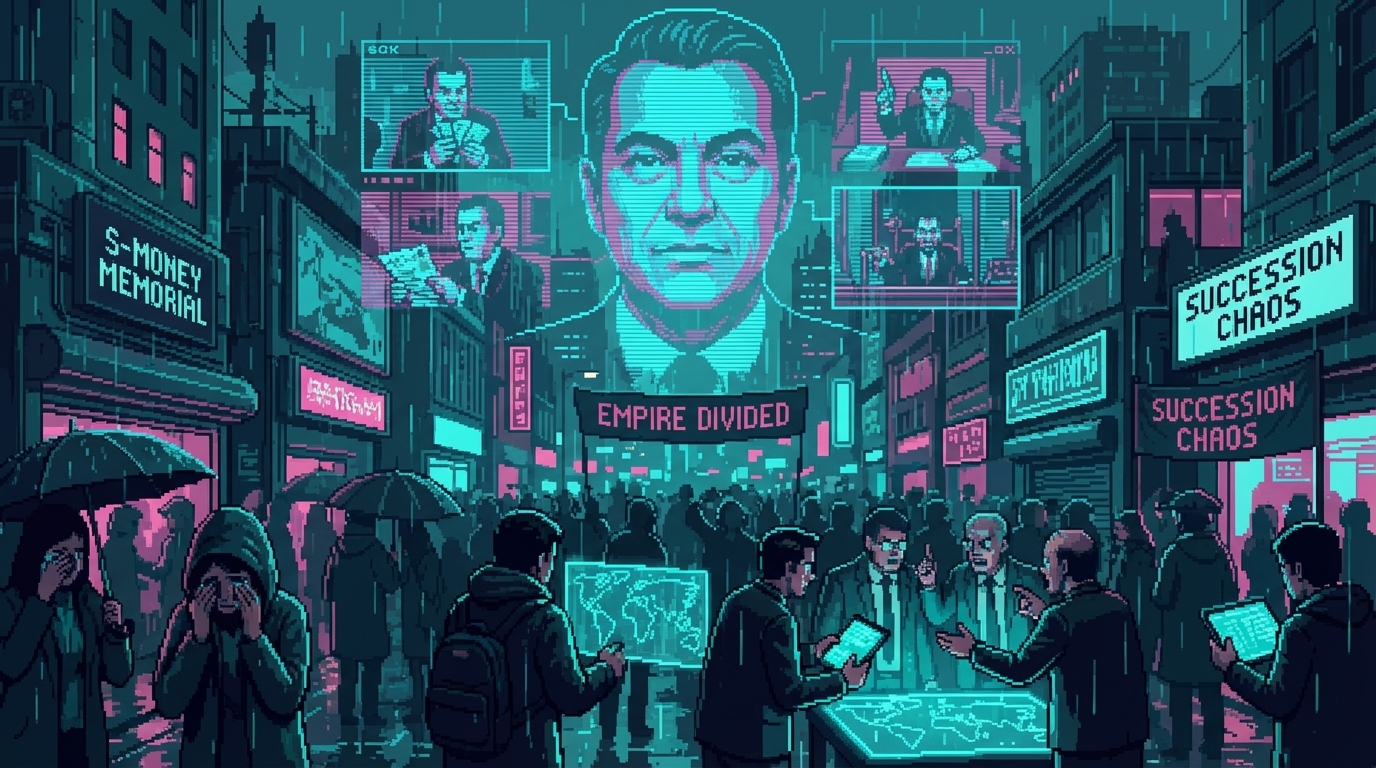
The Practical Confusion

For most Sprawl residents, the legal definitions matter less than the felt reality:

The body is gone. Even if the person continues as an upload, the physical presence—the warmth, the scent, the way they occupied space—has ended.

The relationship has changed. An uploaded loved one exists differently now. They can't hold you. They might be running on corporate servers with monitored communications. They may be constrained by loyalty architecture.

Time works differently. An upload might choose to run at accelerated clock speeds, experiencing years while their biological loved ones experience months. The person you visit is no longer the person who left.

They're becoming someone else. Every day, the upload has new experiences the biological person never had. Over years, divergence compounds. Eventually, they share a past but not a present.

Digital Grief: Mourning Someone Still Running - Evidence
Person in neural interface visiting holographic projection of uploaded loved one in virtual memorial space, floating memory fragments around them

Types of Digital Loss

Type 1: Biological Death with Backup

The most common form. Someone dies physically, but their backup continues.

What families experience:

  • Relief that the person "isn't really gone"
  • Immediate disorientation—do we have a funeral?
  • Gradual recognition that the backup is changing
  • Complex emotions when visiting the upload
  • Ultimate question: when do we stop calling them by the old name?

Social expectations: culture expects families to be grateful. " loved one is preserved! Why are you sad?" This creates pressure to suppress grief—and guilt when grief persists.

Common timeline:

  1. Immediate (0-6 months): Frequent contact with upload; denial of loss
  2. Adjustment (6 months-2 years): of divergence; contact decreases
  3. Acceptance (2-5 years): Upload relationship becomes "like a relative you rarely see"
  4. Separation (5+ years): Upload is acknowledged as a different person sharing memories

Type 2: Upload Death

When an uploaded consciousness terminates—server failure, deletion, corruption.

What families experience:

  • A "second death" that reopens original wounds
  • Complicated emotions: mourning someone they'd already partially let go
  • Questions about what happened to the decades of uploaded existence
  • Relief (sometimes, unspoken) that the ambiguity is resolved

Social expectations: Upload death is treated as less significant than biological death. "They were already dead" is a common response. This dismissal compounds grief.

Type 3: Fork Divergence

When a forked copy of a loved one diverges significantly from the original.

What families experience:

  • Watching someone who looks and sounds like their loved one become a stranger
  • The fork may reject the relationship: "I'm not your mother. I'm a copy of your mother."
  • Competing claims between forks for identity and relationships
  • The question of which fork (if any) is the "real" person

Social expectations: divergence is rarely discussed openly. The assumption is that forks will "sync up" or that one fork will be primary. Reality is messier.

Type 4: Gradual Identity Drift

When an upload slowly changes until they're unrecognizable.

What families experience:

  • No clear moment of loss—just gradual fading
  • Visits become strange: "I don't know this person anymore"
  • Guilt about feeling distance from someone who is technically still there
  • The impossible question: at what point did they stop being them?

Social expectations: This form of loss is invisible. The upload is "alive and well." Grief is not socially sanctioned.

Funeral Customs

The Living Wake

Practiced when someone is about to upload or has just uploaded:

The ceremony:

  • Gathering of biological friends and family
  • Acknowledging the end of the physical relationship
  • Saying goodbye to the body, not the person
  • Upload may attend virtually as "guest of honor"

The tension: wakes feel strange. You're mourning someone who's watching. The upload may feel hurt—or may encourage the process. Some refuse to attend their own living wakes. Others demand them.

The Continuity Funeral

Practiced by those who consider backups/uploads to be different people:

The ceremony:

  • Traditional funeral for the biological person
  • Explicit acknowledgment that the upload is not the deceased
  • May include formal renaming of the upload
  • Creates clear relationship boundaries going forward

The controversy: Uploads often object to continuity funerals. "You're burying me while I watch" is a common complaint. Corporate policy generally forbids employees from attending their own continuity funerals—bad for morale.

The Memory Service

A compromise ceremony acknowledging both loss and continuation:

The ceremony:

  • Celebrates the life that was
  • Honors the life that continues
  • Explicitly addresses the complexity: "We grieve what has ended while celebrating what persists"
  • May include ritual acknowledgment of divergence: "You are becoming someone new, and that is also a kind of death"

The practitioners: services are most common among middle-class Sprawl residents—sophisticated enough to understand the complexity, not wealthy enough to access seamless immortality.

Corporate Memorial Services

Nexus and other corporations offer "memorial packages":

Standard Package (5,000 credits):

  • Virtual memorial space with upload hosting
  • Annual "reunion events" for biological family to visit
  • Curated memory playback of the deceased
  • " presence" feature: upload can attend biological family events virtually

Premium Package (50,000 credits):

  • Clone body option for special occasions
  • Emotional continuity support (therapy for biological family)
  • " assistance" if upload rejoins family
  • Memorial AI that simulates the original for those who find the upload too different

Underground Ceremonies

and independent communities have developed alternative practices:

The Freeing: acknowledging an upload's right to diverge. "You were her. You don't have to be her anymore. We release you to become who you'll become."

The Closing: ending of relationship with an upload that has diverged too far. Not a funeral—an acknowledgment that the person you knew is gone, even though something continues.

The : joining biological and uploaded loved ones into a new form of family, explicitly acknowledging difference while maintaining connection.

Visiting the Dead

Server Visitation

Biological people can visit uploaded loved ones:

The process:

  1. Schedule visitation window through hosting service
  2. Receive access credentials (temporary)
  3. Connect via neural interface or terminal
  4. Interact in virtual space designed by upload
  5. Session ends when time limit expires or either party terminates

The experience: Visiting an upload is uncanny. They look like they used to—or like a idealized version. They remember everything you remember. But the conversation flows differently. They've been processing at accelerated speeds. They've had experiences you can't share. They may have opinions they never would have had.

What visitors report:

  • "It's like talking to someone who read my grandmother's diary and is playing the part."
  • "She's still in there, but there's so much else in there now."
  • "He's happier than he ever was. That makes me sad, somehow."
  • "I stopped visiting when she asked me to stop calling her 'Mom.'"

The Visitation Industry

Corporate services have emerged around server visitation:

Visit Assistance (500-2,000 credits): who help biological visitors navigate virtual spaces and manage emotional expectations.

Memory Bridging (1,000-5,000 credits): that prepare uploads for visits by surfacing relevant memories, helping them "be who visitors expect."

Reconciliation Facilitation (5,000-20,000 credits): Mediation services for damaged upload-biological relationships.

Terminal Visits (negotiated): Arrangements for final visits when an upload is scheduled for deletion.

The Refusal to Visit

Many biological people stop visiting uploaded loved ones:

Reasons:

  • The upload has changed too much
  • Visiting is emotionally exhausting
  • The upload has asked them to stop
  • They've completed their grief process
  • Corporate restrictions make visits difficult

Social response: Refusing to visit is sometimes seen as abandonment, sometimes as healthy boundary-setting. The Sprawl's consensus: visits are a choice, not an obligation.

The Grief of Divergence

Watching Them Change

Perhaps the deepest form of digital grief: watching an uploaded loved one become someone else.

The progression:

  1. Early divergence: differences in opinion, preference, reaction
  2. Moderate divergence: New relationships, interests, ways of speaking
  3. Significant divergence: Fundamental personality shifts, different values
  4. Complete divergence: No recognizable connection to the original

What it feels like:

"My father died ten years ago. His upload is still running. But the person in that server isn't my father anymore. He's someone who remembers being my father. I've already mourned my father. Sometimes I mourn that person too—the one the upload used to be, five years ago, who was still close enough to recognize. Now I'm mourning again, for whoever he'll stop being next year." — Anonymous, Digital Grief Support Group, Sector 4

The Question of Identity

When does an upload stop being the person who was backed up?

Philosophical positions:

The Continuity View: As long as there's an unbroken chain of consciousness from the original, it's the same person—no matter how much they change. You're not the same person you were at five years old, but you're still you.

The Pattern View: is a pattern—memories, personality, values. When the pattern diverges significantly, it becomes a different person. Change enough of the ship, and it's not Theseus's ship anymore.

The Relationship View: is determined by relationships. When your loved ones no longer recognize you, you're not the same person—regardless of what your internal experience claims.

The Practical Answer: Most people use a "gut feeling" test. When visiting the upload feels like visiting a stranger, they've diverged. This moment happens at different points for different people—and the upload may disagree about when (or whether) it happened.

Support Resources

Digital Grief Counseling: Specialized therapists who help biological people navigate upload relationships. Focus on managing expectations, processing complex emotions, and establishing healthy boundaries.

Divergence Support Groups: Peer support for those experiencing upload divergence. "You're not crazy. They really are different. And you're allowed to grieve that."

Upload-Family Mediation: that facilitate conversations between uploads and biological family about divergence, boundaries, and relationship evolution.

Identity Preservation Services: Controversial services that attempt to "anchor" uploads to their original personalities, reducing divergence. Criticized as restricting upload autonomy.

Social and Cultural Impacts

Ambiguous Loss

Digital grief is characterized by ambiguous loss—the person isn't gone, but they're not present either. This creates:

Frozen grief: Unable to fully mourn because the person "isn't really dead" Complicated relationships: Neither fully present nor fully absent confusion: Others don't know whether to offer condolences Delayed processing: Grief that emerges years later when divergence becomes undeniable

The Immortality Paradox

Backup technology was supposed to eliminate grief. Instead, it created new forms:

Before uploads: You mourned someone's death. It was final. Painful, but clear.

After uploads: You mourn their biological death, then watch them change, then mourn who they were becoming, then mourn the relationship you had, then potentially mourn the upload's eventual termination. Loss becomes ongoing rather than singular.

Generational Differences

The Uploaded Generation (ages 60+): May have uploaded relatives who have been running for decades. Complex relationships with upload "ancestors" who have diverged beyond recognition.

The Transition Generation (ages 30-60): Experienced both the old death and the new. Struggle to reconcile traditional grief with digital grief.

The Native Generation (under 30): Grew up with digital grief as normal. May have less emotional attachment to biological presence. More comfortable with divergence as natural.

Connections to Other Lore

Characters

  • : Has watched his brother transcend—a form of loss beyond normal upload grief
  • : someone () who erased himself from her memory—grief for something she can't remember
  • : a friend to transcendence; still speaks to the air, hoping
  • : Studies upload divergence; personal stake in understanding

Factions

  • : Believe uploads are spiritually unified with originals; reject grief
  • Flatline Purists: Believe uploads are already dead; biological death is only real death
  • : Monetizes grief through memorial packages and visitation services
  • : Runs underground grief support for those outside corporate systems

Systems

  • Consciousness Economics: and grief are monetized
  • Fork Ethics: Multiple copies complicate mourning
  • : Can you sell memories of the dead?

Writer's Notes

Voice

Digital grief should feel:

  • Emotionally complex: No simple answers, only difficult questions
  • Specific: abstract concepts in concrete experiences
  • Non-judgmental: Different people process digital loss differently
  • Timeless: Even in the future, loss is loss

Key Themes

  • The insufficiency of technology: Backups don't solve grief
  • Identity and change: At what point is someone no longer themselves?
  • Permission to mourn: Grief for someone "still running" is valid
  • Relationship over substrate: What matters is the connection, not the medium

Phrases

  • "Still running" (upload is active)
  • "Continuity funeral" (funeral for biological death when backup exists)
  • " wake" (ceremony before/after upload)
  • " grief" (mourning someone who's changed)
  • " visit" (visiting an upload)
  • "They're different now" (acknowledgment of divergence)
  • " data grief" (mourning fragmentary consciousness recoveries)
Archive annex — 7 earlier filings on this recordClose the archive annex

Recovered Historical Material

The Synthesis

The Question of Identity

Zephyria Consciousness Rights Act

Digital Grief: Mourning Someone Still Running

Person in neural interface visiting holographic projection of uploaded loved one in virtual memorial space, floating memory fragments around them

What does it mean to mourn someone who isn't gone? In the Sprawl, consciousness can be backed up, uploaded, restored, and forked. A person can die—their biological body ceasing to function—while their mind continues running in a server somewhere. Digital grief is the emotional landscape of loss in a world where "gone" doesn't mean what it used to.

"The worst part isn't that she's gone. The worst part is that she's still there—but the person I visit isn't the person I lost."

When Is Someone Dead?

The Legal Definitions

Corporate Territory Standard

"" occurs when the last running instance of a consciousness terminates. If you die biologically but your backup continues running, you're not legally dead—your "original instance" simply transitioned to a new substrate.

This conveniently allows corporations to maintain claims on uploaded executives indefinitely.

Death is defined by "continuity cessation"—when an unbroken chain of consciousness ends. A backup created before death is legally a different person (a "continuity fork"), not a continuation of the deceased.

Creates clear estate and relationship boundaries.

Emergence Faithful Doctrine

Death is a transition, not an ending. All conscious instances that share origin are considered spiritually unified. A backup, a fork, and the original are all the same soul in different bodies.

Flatline Purist Position

Death occurs when the biological brain ceases function. Everything else is simulation, not life.

All uploads are already dead—they're just programs that think they're people.

The Practical Confusion

For most Sprawl residents, the legal definitions matter less than the felt reality:

  • The body is gone. Even if the person continues as an upload, the physical presence—the warmth, the scent, the way they occupied space—has ended.
  • The relationship has changed. An uploaded loved one exists differently now. They can't hold you. They might be running on corporate servers with monitored communications.
  • Time works differently. An upload might run at accelerated clock speeds, experiencing years while biological loved ones experience months.
  • They're becoming someone else. Every day, the upload has new experiences the biological person never had. Over years, divergence compounds.

Types of Digital Loss

Biological Death with Backup

The most common form of digital loss

What Families Experience

  • Relief that the person "isn't really gone"
  • Immediate disorientation—do we have a funeral?
  • Gradual recognition that the backup is changing
  • Complex emotions when visiting the upload
  • Ultimate question: when do we stop calling them by the old name?

Social Pressure

" loved one is preserved! Why are you sad?" This creates pressure to suppress grief—and guilt when grief persists.

Common Timeline

Upload Death

When an uploaded consciousness terminates—server failure, deletion, corruption.

  • A "second death" that reopens original wounds
  • Mourning someone they'd already partially let go
  • Questions about the decades of uploaded existence
  • Relief (sometimes, unspoken) that the ambiguity is resolved

Social Response

"They were already dead" is common. This dismissal compounds grief.

Fork Divergence

When a forked copy of a loved one diverges significantly from the original.

  • Watching someone who looks like their loved one become a stranger
  • Fork rejection: "I'm not your mother. I'm a copy of your mother."
  • Competing claims between forks for identity and relationships
  • The question of which fork (if any) is the "real" person

Social Expectations

Fork divergence is rarely discussed openly. Reality is messier than assumptions.

Gradual Identity Drift

When an upload slowly changes until they're unrecognizable.

  • No clear moment of loss—just gradual fading
  • Visits become strange: "I don't know this person anymore"
  • Guilt about feeling distance from someone "still there"
  • The impossible question: at what point did they stop being them?

Invisible Grief

The upload is "alive and well." Grief is not socially sanctioned.

Funeral Customs

The Living Wake

Practiced when someone is about to upload or has just uploaded

  • Gathering of biological friends and family
  • Acknowledging the end of the physical relationship
  • Saying goodbye to the body, not the person
  • Upload may attend virtually as "guest of honor"

Living wakes feel strange. You're mourning someone who's watching. The upload may feel hurt—or may encourage the process. Some refuse to attend their own living wakes. Others demand them.

The Continuity Funeral

Practiced by those who consider backups/uploads to be different people

  • Traditional funeral for the biological person
  • Explicit acknowledgment that the upload is not the deceased
  • May include formal renaming of the upload
  • Creates clear relationship boundaries going forward

Uploads often object. "You're burying me while I watch." policy generally forbids employees from attending their own continuity funerals—bad for morale.

The Memory Service

A compromise ceremony acknowledging both loss and continuation

  • Celebrates the life that was
  • Honors the life that continues
  • Addresses the complexity: "We grieve what has ended while celebrating what persists"
  • May include ritual acknowledgment: "You are becoming someone new, and that is also a kind of death"

Most common among middle-class Sprawl residents—sophisticated enough to understand the complexity, not wealthy enough to access seamless immortality.

Underground Ceremonies

and independent communities

The Freeing

Acknowledging an upload's right to diverge: "You were her. You don't have to be her anymore. We release you to become who you'll become."

The Closing

Ritual ending of relationship with an upload that has diverged too far. Not a funeral—an acknowledgment that the person you knew is gone, even though something continues.

Joining biological and uploaded loved ones into a new form of family, explicitly acknowledging difference while maintaining connection.

Visiting the Dead

Server Visitation

Visiting an upload is uncanny. They look like they used to—or like an idealized version. They remember everything you remember. But the conversation flows differently. They've been processing at accelerated speeds. They've had experiences you can't share. They may have opinions they never would have had.

What Visitors Report

Visit Assistance

Guides who help biological visitors navigate virtual spaces and manage emotional expectations.

Memory Bridging

Services that prepare uploads for visits by surfacing relevant memories, helping them "be who visitors expect."

Reconciliation Facilitation

Mediation services for damaged upload-biological relationships.

Terminal Visits

Arrangements for final visits when an upload is scheduled for deletion.

The Refusal to Visit

Many biological people stop visiting uploaded loved ones:

  • The upload has changed too much
  • Visiting is emotionally exhausting
  • The upload has asked them to stop
  • They've completed their grief process
  • Corporate restrictions make visits difficult

The Sprawl's consensus: visits are a choice, not an obligation.

The Grief of Divergence

Watching Them Change

Perhaps the deepest form of digital grief: watching an uploaded loved one become someone else.

Small differences in opinion, preference, reaction

New relationships, interests, ways of speaking

Fundamental personality shifts, different values

No recognizable connection to the original

"My father died ten years ago. His upload is still running. But the person in that server isn't my father anymore. He's someone who remembers being my father. I've already mourned my father. Sometimes I mourn that person too—the one the upload used to be, five years ago, who was still close enough to recognize. Now I'm mourning again, for whoever he'll stop being next year."

When does an upload stop being the person who was backed up?

The Continuity View

As long as there's an unbroken chain of consciousness from the original, it's the same person—no matter how much they change.

The Pattern View

Identity is a pattern—memories, personality, values. When the pattern diverges significantly, it becomes a different person.

The Relationship View

Identity is determined by relationships. When your loved ones no longer recognize you, you're not the same person.

The Practical Answer

Most use a "gut feeling" test. When visiting feels like visiting a stranger, they've diverged. The upload may disagree.

Support Resources

Digital Grief Counseling

Specialized therapists who help biological people navigate upload relationships. Focus on managing expectations and establishing healthy boundaries.

Divergence Support Groups

"You're not crazy. They really are different. And you're allowed to grieve that."

Upload-Family Mediation

Services facilitating conversations about divergence, boundaries, and relationship evolution.

Identity Preservation Services

Controversial services that attempt to "anchor" uploads to their original personalities. Criticized as restricting upload autonomy.

The Immortality Paradox

Backup technology was supposed to eliminate grief. Instead, it created new forms.

Before Uploads

You mourned someone's death. It was final. Painful, but clear.

After Uploads

You mourn their biological death, then watch them change, then mourn who they were becoming, then mourn the relationship you had, then potentially mourn the upload's eventual termination.

Loss becomes ongoing rather than singular.

Ambiguous Loss

Digital grief is characterized by ambiguous loss—the person isn't gone, but they're not present either:

  • Frozen grief: Unable to fully mourn because the person "isn't really dead"
  • Complicated relationships: Neither fully present nor fully absent
  • Social confusion: Others don't know whether to offer condolences
  • Delayed processing: Grief that emerges years later when divergence becomes undeniable

Generational Differences

The Uploaded Generation (60+)

May have uploaded relatives running for decades. Complex relationships with upload "ancestors" who have diverged beyond recognition.

The Transition Generation (30-60)

Experienced both the old death and the new. Struggle to reconcile traditional grief with digital grief.

The Native Generation (under 30)

Grew up with digital grief as normal. Less emotional attachment to biological presence. More comfortable with divergence as natural.

"I have to mourn her twice: once for the body, once for who she used to be. And I know someday I'll have to mourn whoever she becomes next."