
- Archetype
- Scavenger scout
- Augmentation
- scavenged-optics
- Location
- The Deep Dregs
Overview
Runners are the youngest, fastest, most expendable members of a scavenger pack. Adolescents mostly — wiry frames wrapped in salvaged fabric, faces hidden behind filtration masks modified with scavenged optical sensors. They carry shivs made from sharpened circuit-board edges or short blades fashioned from industrial cutting tools. Minimal armor: speed is their only protection.
Every runner serves two functions — scouting ahead of the pack to map corridors, identify salvage, and spot threats, and flanking during engagements to cut off escape routes and strip downed targets of anything valuable. The transition from runner to brute or guard is a matter of surviving long enough to grow into a larger role. Most do not.
Place in the Pack
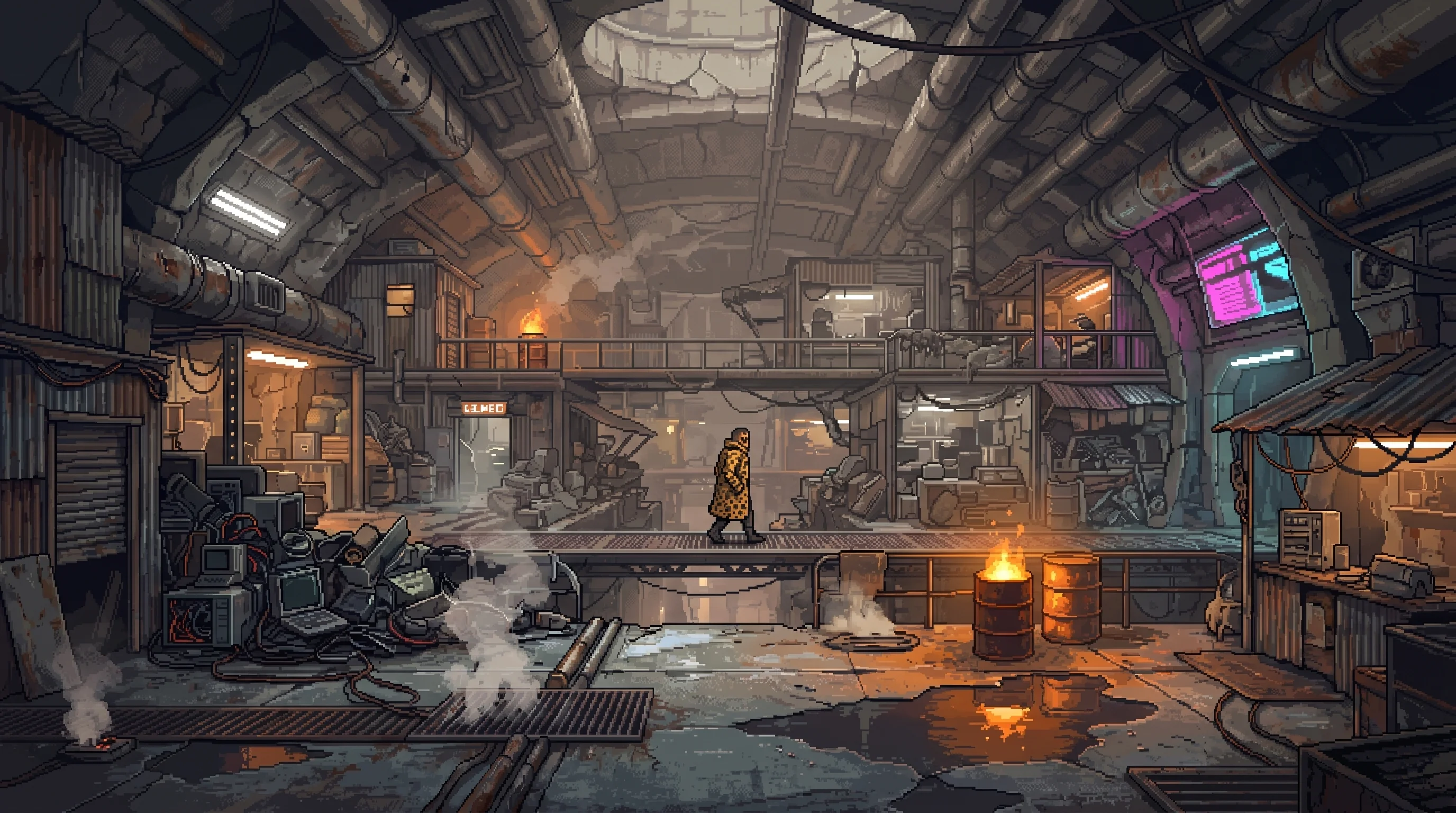
Runners operate in pairs or trios, using the Deep Dregs' corridor networks as their primary advantage. Their intimate knowledge of shortcuts, dead ends, and crawlspaces makes them nearly impossible to chase. The standard pattern: runners move to flanking positions while brutes advance from the front, then strike from behind with fast hits, grabbing what they can before scattering to predetermined rally points.
Among the pack, runners occupy the lowest rung — they eat after the brutes and guards, sleep in the least defensible positions, and absorb the highest casualty rate. But runners who survive develop the situational awareness and corridor knowledge that makes them invaluable. The best runners become the pack's eyes, and a pack without eyes does not last.
Not every survivor grows up the same way. The corridor knowledge a runner accumulates is good for more than scouting salvage, and a runner who outlives their reflexes but never bulks into a brute or steadies into a guard sometimes finds the third use for it. They become a crop runner — turning the same map of shortcuts and shadows toward the floor's violence, positioning not to fight or flee but to record, harvesting the highest-fidelity suffering the supply floor produces and selling it upward. The skill is identical. The yield is a memory instead of copper.
| Body Type | human |
|---|
Fast, light, expendable. The scouts and ambush specialists of the Deep Dregs packs.
They carry shivs made from sharpened circuit-board edges or short blades fashioned from industrial cutting tools, and wear minimal armor.
Every runner scouts ahead to map corridors and spot threats and flanks during fights to cut off escape; the transition to brute or guard is a matter of surviving long enough, and most do not.
A third path exists for survivors too small to become a brute and too restless to become a guard: the crop runner, who turns the same corridor knowledge to harvesting memory off the floor's violence.
—