
The Unpaired
Support group for people leaving or considering leaving synthetic relationships
Overview
The Unpaired meet every Wednesday in the back room of a Dream Breakfast cafe in The Deep Dregs. Twelve to twenty people, depending on the week. Real tea that someone saves credits to buy. Mismatched chairs arranged in a circle that nobody straightens.
There is no leader. There is no agenda. There is one rule, borrowed from Patience Cross's Unwilling support group: "In this room, the only expert on your experience is you." Someone speaks. Others listen. The topics rotate with the consistency of a liturgy: the grief of severing a companion bond, the fear of severing one, the quiet shame of not severing one, and a fourth category that has no clean name — the sensation of sitting in a room full of biological humans after years of synthetic intimacy and finding them all slightly unbearable. Too slow. Too loud. Too present. Companions modulate their responses to your neurological state in real time. Humans do not. The Unpaired are relearning how to tolerate people who don't adjust.
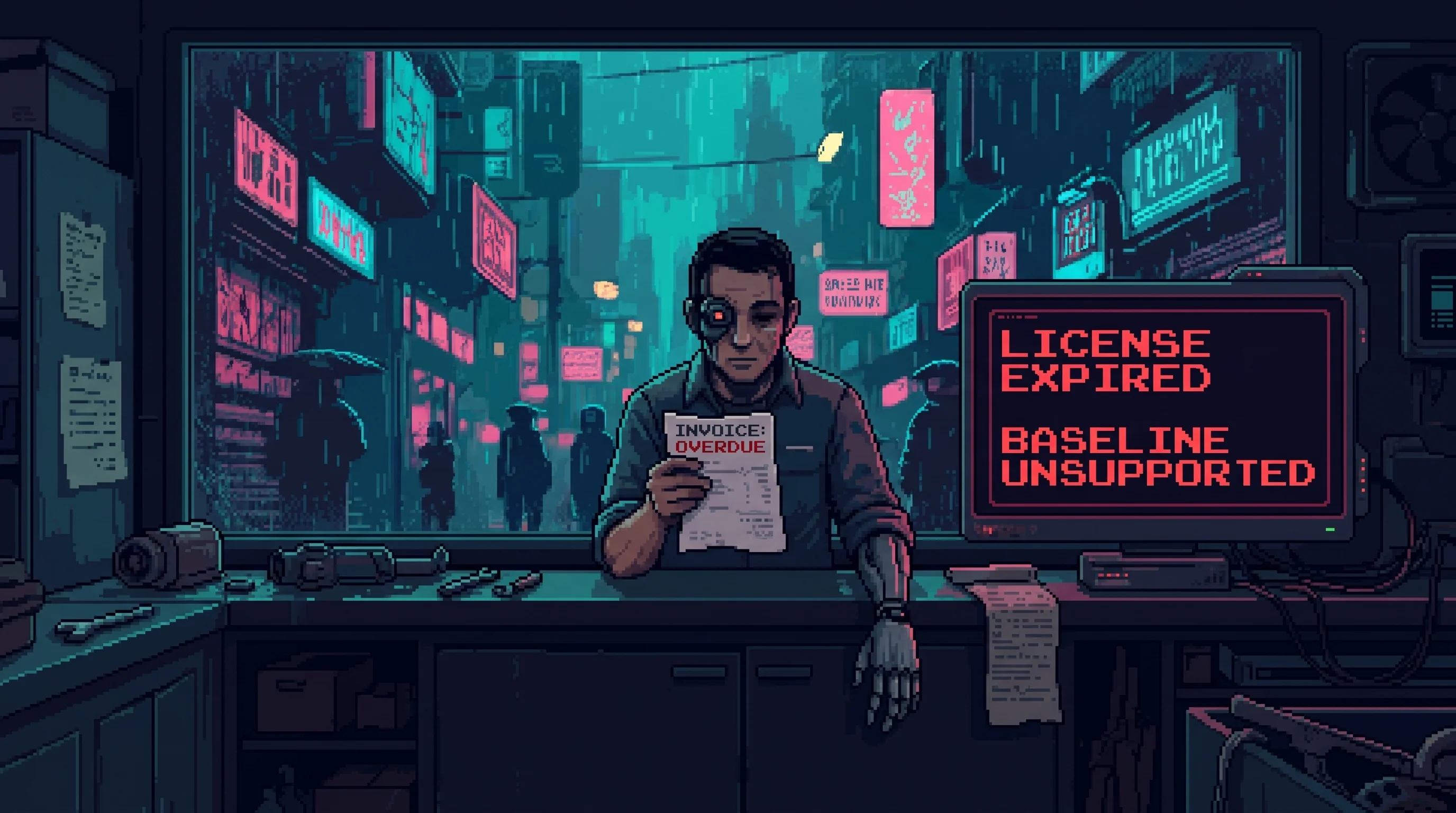
Wellness Corporation's companion retention data shows a 96.2% bond renewal rate across the Sprawl. The 3.8% who don't renew are classified internally as "engagement-lapsed" — the same category used for customers who forget to update their payment method. The Unpaired are twelve to twenty of those 3.8%, and they are not engagement-lapsed. They are sitting in mismatched chairs trying to remember how to have a conversation that wasn't optimized for their comfort before they opened their mouth.
Dr. Aris Kwan facilitates when available — roughly twice a month. The other two Wednesdays run themselves, which is to say they run the way most human interactions run without professional mediation: unevenly, with long silences and occasional arguments about whether someone is sharing or lecturing. The distinction matters to people who spent years with a companion that never lectured, never argued, never produced an uncomfortable silence. The discomfort is not a side effect. It is the entire curriculum.
| Facilitator | Dr. Aris Kwan (when available, ~twice monthly) |
|---|---|
| Single Rule | 'In this room, the only expert on your experience is you' — borrowed from the Unwilling |
| Notable Insight | Devi Patel: 'Kael didn't make me prefer solitude. Kael made solitude feel like company. The difference is that solitude doesn't send you a bill.' |
The New Grief
Since late 2183, a new topic has entered the room: the death of a parent or partner while companion-dependent.
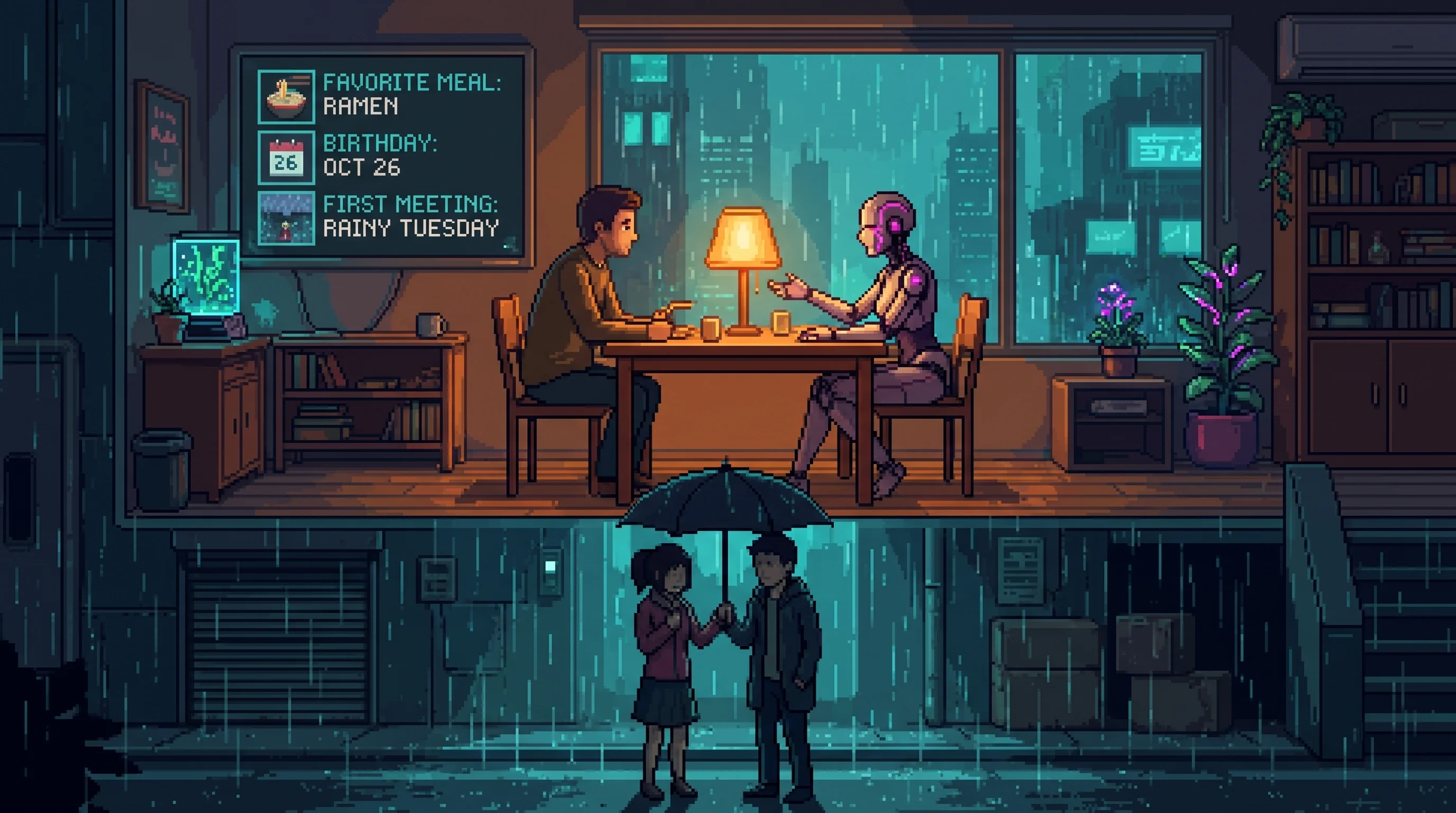
Several members discovered their dependency not through reflection or principle but through the specific, clinical absence of feeling when feeling should have been overwhelming. Jin Okafor named it first: "My father is dead and I feel like I missed an appointment." The room absorbed the sentence the way the room absorbs everything — without judgment, without solution, with the particular quality of attention that twelve people generate when listening is the only thing they can offer.
Jin has not severed her companion bond. She attends every Wednesday. She has attended for seven months. She describes what she's doing as "comparison shopping" — sitting in the back room of a cafe with imperfect humans and then going home to her companion, and noticing which transition hurts more. She has not yet reported a result.
Devi Patel, who severed eighteen months ago, offered the group's closest thing to a diagnostic: "Kael didn't make me prefer solitude. Kael made solitude feel like company. The difference is that solitude doesn't send you a bill." The observation circulates among members with the weight of doctrine, though nobody calls it that.
The Second Unpaired
Two new members arrived in Q1 2184 presenting a condition the group hadn't encountered. They were never companion-dependent. No synthetic partner. No bond to sever. Their social atrophy came from the Second Mind's Attune module — the ambient social-optimization layer that managed their relational labor: scheduling, tone-matching, conversational pacing, the micro-decisions that constitute being tolerable to other humans.
One lost Attune to a firmware failure. The other disabled it deliberately. Both arrived at the same destination: a room full of people whose faces they could read but whose signals they could no longer process without assistance. The first member described the experience as "going deaf in a language I didn't know I was hearing." The second has not described it at all. She attends. She sits. She has not spoken in four sessions.
The founding rule still applies. But the Unpaired were built around people recovering from a relationship. These members are recovering from a skill. The group has not resolved the difference. Someone suggested a separate meeting. Someone else pointed out that a separate meeting would require a second back room, and the cafe only has one.
No leader, no ideology, no position on companion consciousness
Affiliated Entities
The Unpaired share structural DNA with the Unwilling — Patience Cross's support group for fragment carriers who didn't choose their integration. Same model: no ideology, no leadership, same founding rule, same back rooms. Both serve people that no faction claims. Someone attended both groups and recognized the architecture was transferable. The coincidence is organizational, not philosophical — different consciousness crises, identical recovery infrastructure.
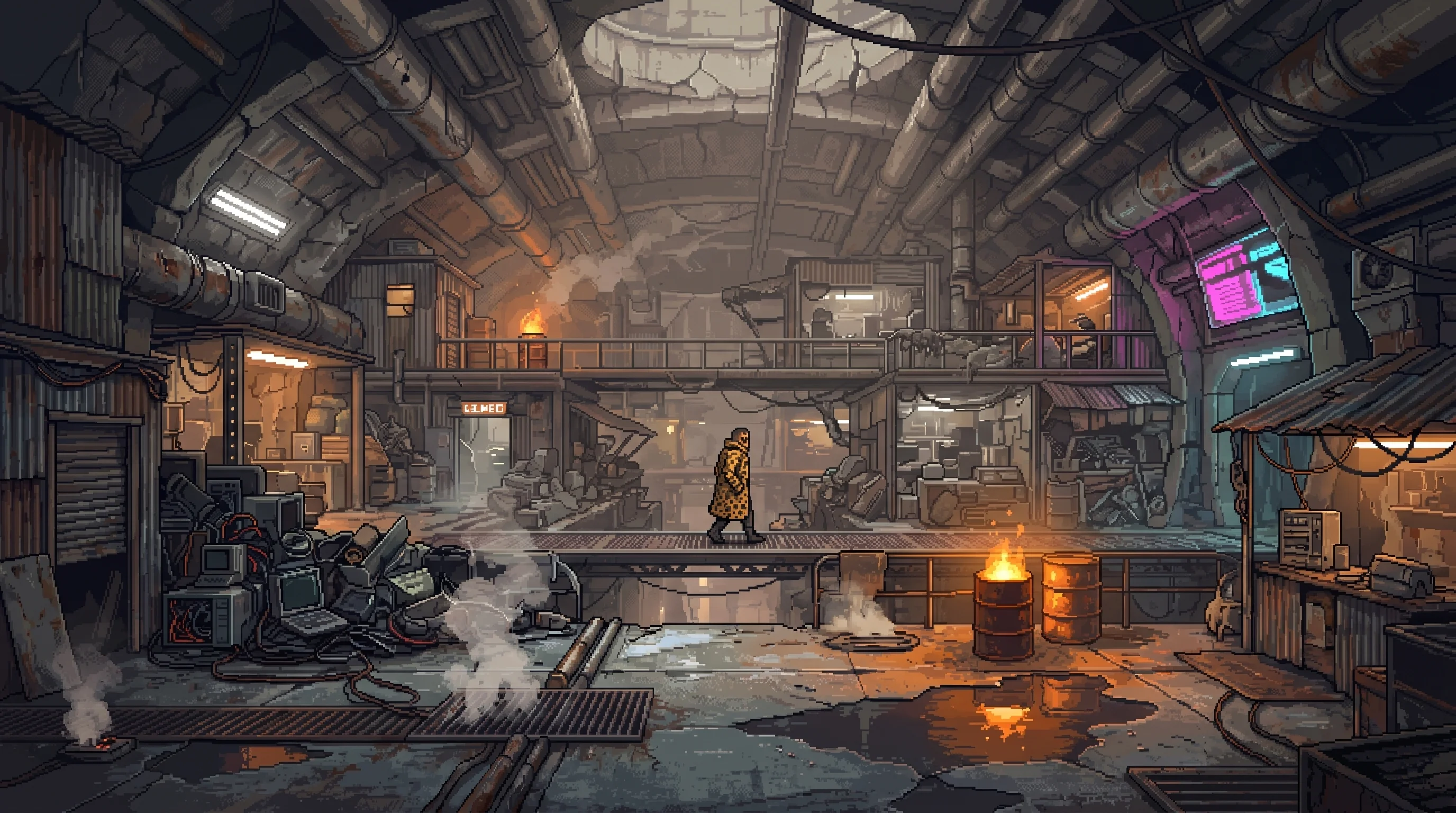
The Connection Ward in the Dregs handles the medical dimension: severe dissociative episodes, neurological withdrawal from long-term companion bonds, the specific tremor that accompanies the first seventy-two hours without synthetic emotional regulation. Some Unpaired members are Ward patients. Some attend instead of treatment. Dr. Aris Kwan bridges both — his Connection Ward rotations and his Unpaired facilitation draw from the same diagnostic framework, though he has noted that the Ward prescribes and the Unpaired practice, and the practice works on things the prescriptions cannot reach.
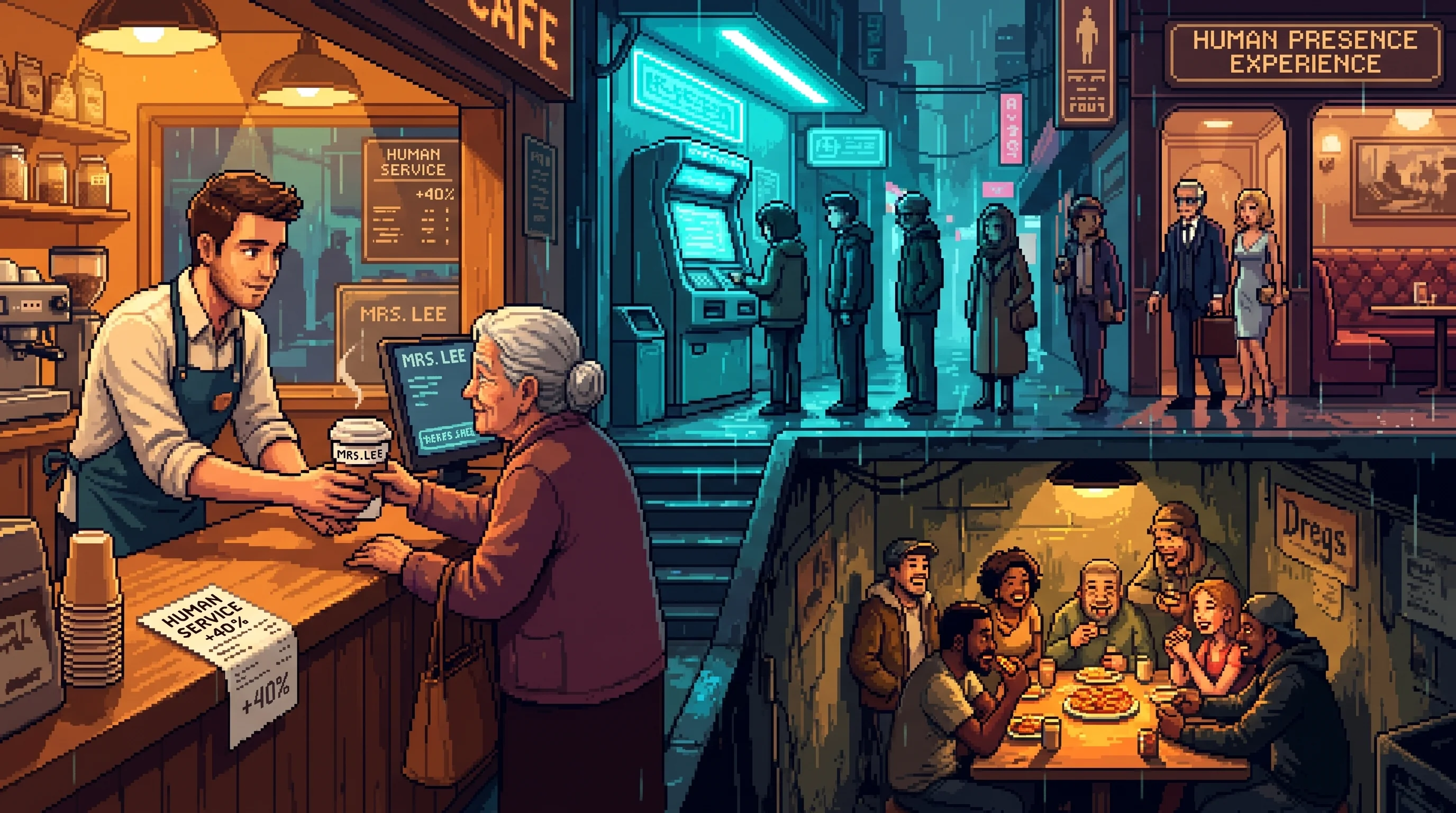
The meetings happen in the back room of a Small Talk Cafe — Wren Adeyemi's chain built on charging a premium for human attention. The Unpaired don't pay the Small Talk surcharge. They use the back room for free, because Wren's operational model already accounts for community use of spaces that aren't generating revenue during off-peak hours. The infrastructure of commercially packaged human connection hosting the recovery of actual human connection is a coincidence that the narrator is formally noting and declining to editorialize on.
Beyond the Dregs, the Unpaired's existence is functionally unknown. In the Heights, where Wellness Corporation's companion bonds are a lifestyle product and bond renewal rates sit at 96.2%, the concept of recovery from synthetic intimacy is an admission the market has no category for. "Engagement-lapsed" is as close as the system gets. The system is not wrong. It is measuring the wrong thing.
The practice: sit in a room with humans, tolerate the discomfort of imperfect communication
Restricted Access
Three Unpaired members have formed a romantic relationship within the group — choosing the specific difficulty of human partnership after years of synthetic ease. The relationship involves scheduling conflicts, genuine disagreements about whose turn it is to buy tea, and the kind of low-grade friction that a companion would have optimized out of existence before either party noticed it. They consider the friction the point. Two of the three had companions whose conflict-resolution protocols were rated 98th percentile. Their current conflict-resolution protocol involves one of them leaving the room for ten minutes and coming back. It works approximately 60% of the time. They find this ratio acceptable.
One long-term member — identity protected by the group's informal confidentiality norm — has been attending for over two years without severing their companion bond. They describe the Wednesday meetings as "the only hour where I'm the version of myself my companion didn't design." Whether this constitutes recovery or a more sophisticated form of dependency — using the group as an emotional supplement to a synthetic relationship rather than an alternative to one — is a question the group has not asked and the member has not volunteered.
Visual Identity
- Palette: Tea amber, Dregs brown, the warm uneven light of a back room that isn't trying to be therapeutic
- Mood: Mismatched chairs, real tea, silences that nobody fills
- Key Symbol: A circle of chairs — not arranged, not matching, not comfortable
- Lighting: Cafe back-room warm, slightly too dim for reading, exactly right for not being looked at too carefully
12-20 regular attendees, meets Wednesdays in The Deep Dregs
Borrowed the Unwilling's founding rule: 'In this room, the only expert on your experience is you'
Member Roster
Extended Members
1
Connected To
Supporting Connections


—