The Newcomer's Minute
One minute of silence for every newcomer's first view of Earth from orbit
Overview
It started with construction workers who remembered being interrupted.
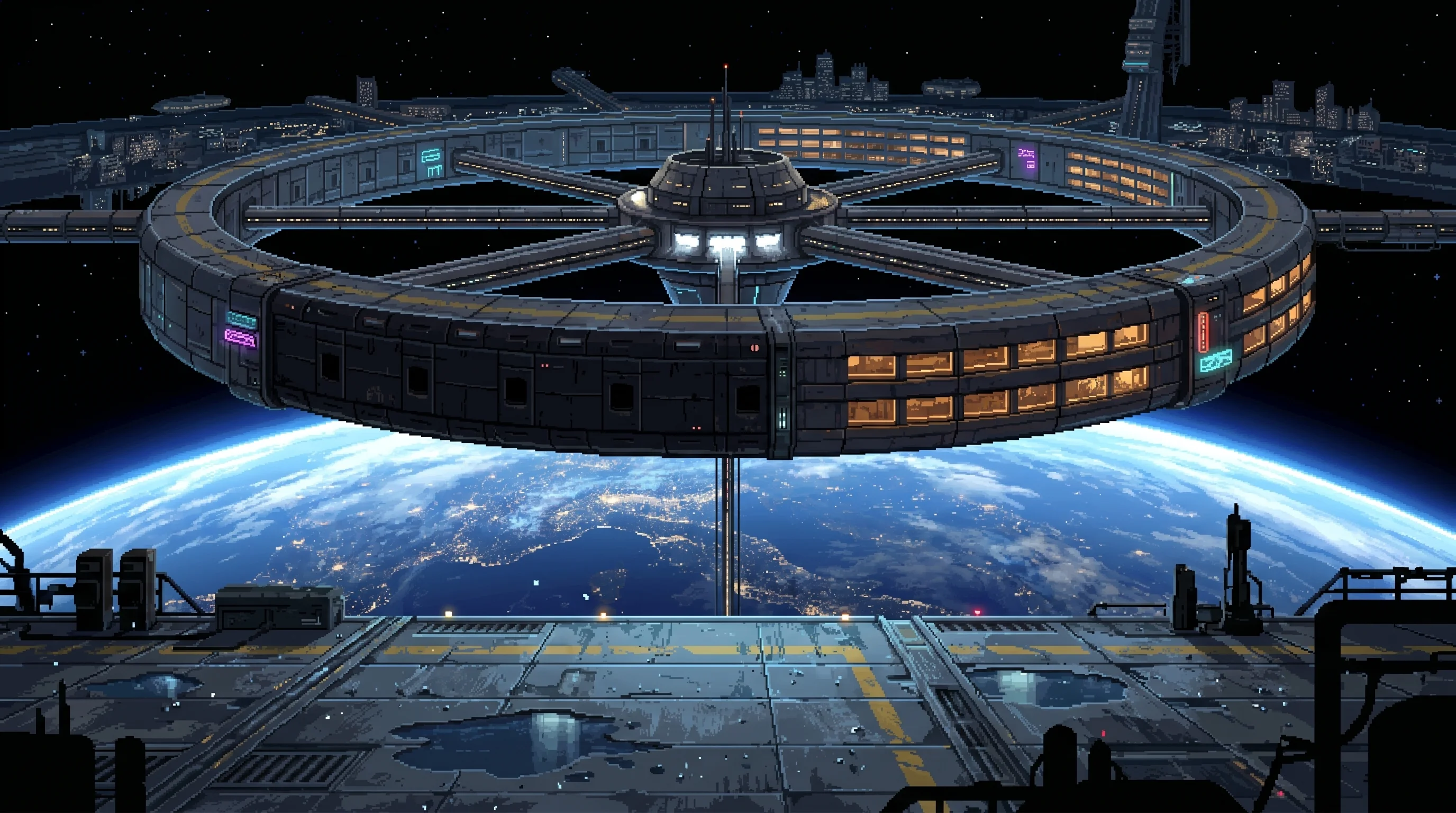
When Highport opened in 2170, the first permanent residents noticed a pattern at the observation decks: every new arrival walked to the viewport, looked down at Earth, and stopped. Not paused. Stopped. Hands mid-gesture. Sentences mid-word. The body's entire project management system shutting down simultaneously because the brain had received information it could not file.
The construction crews — people who had been looking at Earth from orbit for months and had mostly gotten used to it the way you get used to anything that should be impossible — recognized the expression. They had worn it themselves. Some of them remembered being talked to during theirs, being touched on the shoulder, being asked if they were okay. They remembered hating it.
So they established the custom: leave them alone. One minute. Don't speak. Don't touch. Don't offer water. Let them have the moment of realizing they are not on the Earth anymore, and that the Earth did not notice them leaving.
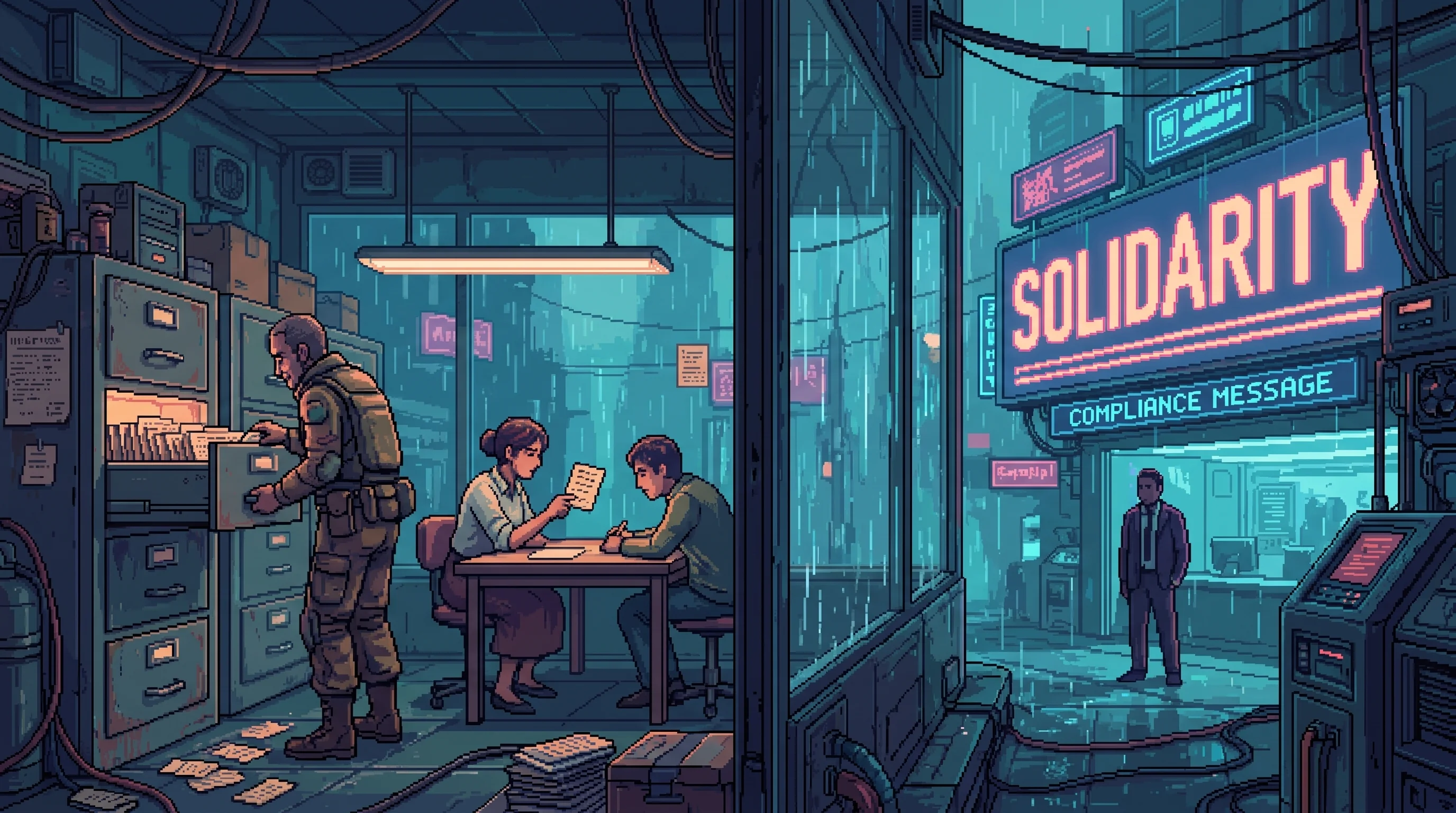
The Newcomer's Minute has been observed for fourteen years. It is not written in any regulation. It is not enforced by any authority. Ironclad security respects it. Nexus analysts pause mid-scan. Even the cargo handlers who need the newcomer to physically move so they can get a loading frame through the corridor wait the sixty seconds, which is remarkable given that cargo handlers on Highport bill by the minute and their supervisors bill by the quarter-minute.
Station administration has attempted to formalize it seven times. Proposals have included a commemorative plaque ("Your First View — A Highport Tradition"), a suggested photo opportunity zone with branded viewport frames, and a Triumph Social integration that would auto-post the newcomer's biometric response as a "moment of wonder" with Highport geo-tag. All seven proposals were quietly shelved by the same station chiefs who enforce the Minute informally. The proposals are technically still active in Ironclad's project queue. They have been "under review" for a combined thirty-one years.
Nobody has explained why the proposals keep dying. The people who kill them do not appear to discuss it with each other. The decision renews itself each time a new administrator arrives, reviews the proposals, and tables them without comment. Internal memos cite "insufficient community engagement data" and "pending cultural impact assessment." The cultural impact assessment has never been commissioned. The community engagement data has never been collected. The forms requesting both have been filed, stamped, and routed to offices that process them at a rate of zero per fiscal year.
The ritual transcends jurisdiction, faction, class, and purpose
The Minute the Cameras Cannot Explain
Highport's observation decks are among the most surveilled spaces on the station — viewport proximity sensors, biometric monitors, population density tracking, neural-interface telemetry logging. The permanent record captures every Newcomer's Minute in full: the approach to the viewport, the cessation of movement, the biometric cascade (cortisol spike averaging 340% above baseline, heart rate elevation to 112 bpm mean, respiratory rate dropping to 6.2 breaths per minute — the body's paradoxical response to overwhelming input is to breathe less of it in).
The archive contains fourteen years of this data. Thousands of instances. Each meticulously timestamped.
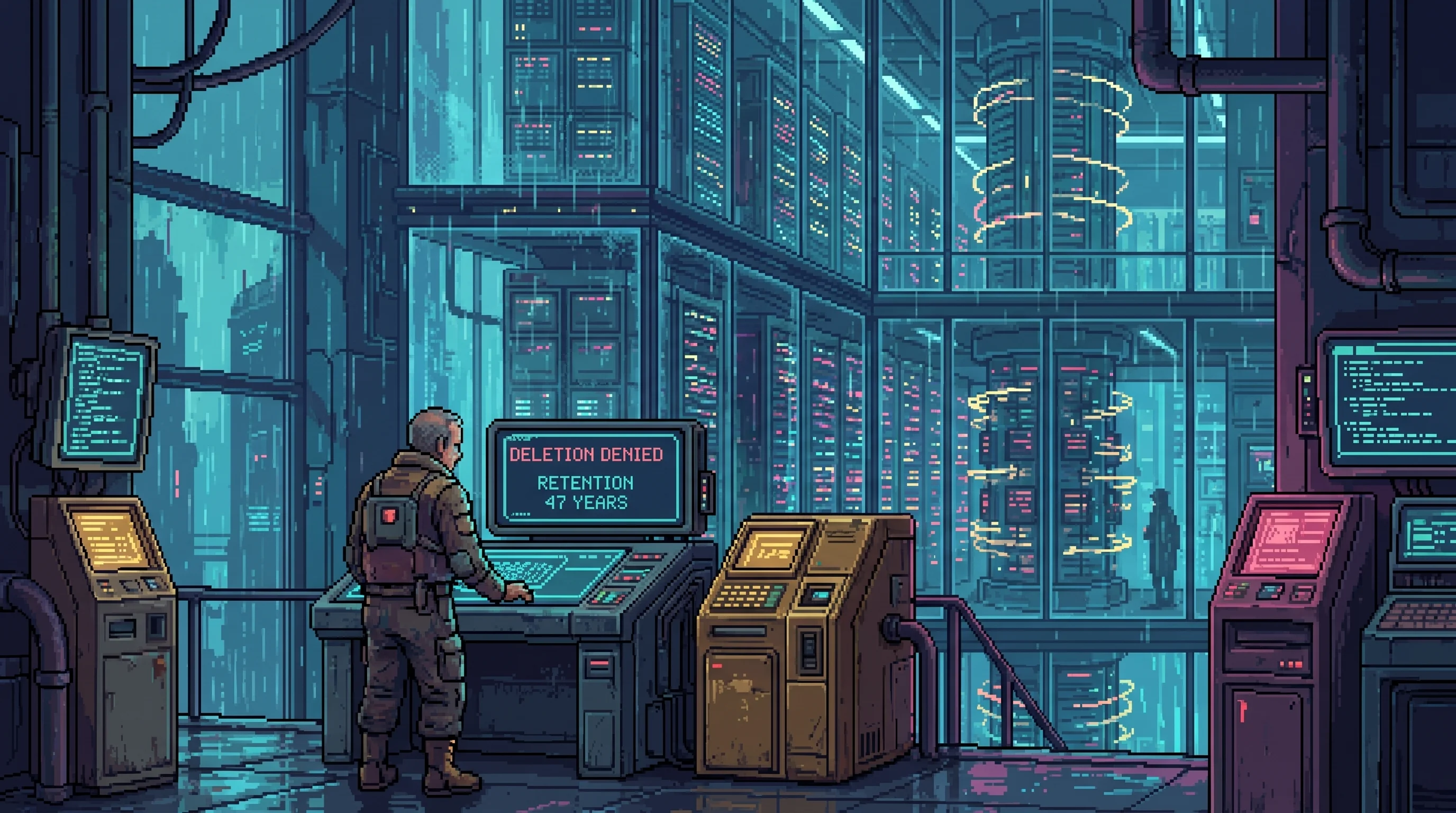
Security analytics have flagged the Newcomer's Minute as a recurring "anomalous behavioral synchronization event" every quarter since 2171. The flag triggers automatically when the system detects coordinated behavioral change across unrelated individuals without an identifiable broadcast signal, announcement, or instruction. The algorithm's recommendation is consistent: investigate source of coordination. Station authorities have declined the recommendation fifty-six consecutive times. The declination form requires a reason. Fifty-six times, the reason field reads: "No action required."
The algorithm has begun weighting the Newcomer's Minute lower in its anomaly rankings. Not because it has been resolved. Because the system learned that flagging it produces no response. The Minute trained the surveillance apparatus to look away — not through interference or hacking, but through the specific human behavior of ignoring a form until the form stops arriving.
The data can quantify the cortisol spike but not what causes it. It can timestamp the sixty-second pause but cannot identify the transmission mechanism — how every bystander knows to stop, without signage, without announcement, without a single person saying "this is what we do." A newcomer's first Minute is learned by experiencing it. By feeling the silence collect around you like weather, offered by strangers who remember needing it and have nothing to gain from providing it.
Fourteen years. No written rule. No posted sign. No enforcement mechanism. A cargo handler losing sixty billable seconds on a Tuesday because someone they've never met is looking at the planet for the first time and the planet is very small and the dark is very large and the handler remembers what that felt like and so they wait.
The permanent record has logged every instance. The permanent record can explain none of them.
Not written in any regulation; universally observed for 14 years
Connections
- The Three-Day Memorial — both are universal rituals that transcend faction and class, observed without regulation or authority, renewed through collective decision rather than institutional mandate
- The Analog Hour — both are temporal spaces where normal rules suspend — the Analog Hour by disconnecting from neural interfaces, the Newcomer's Minute by disconnecting from the assumption that you matter at planetary scale
- The Noise Floor — both protect an experience from the systems that would quantify, optimize, and ultimately destroy it
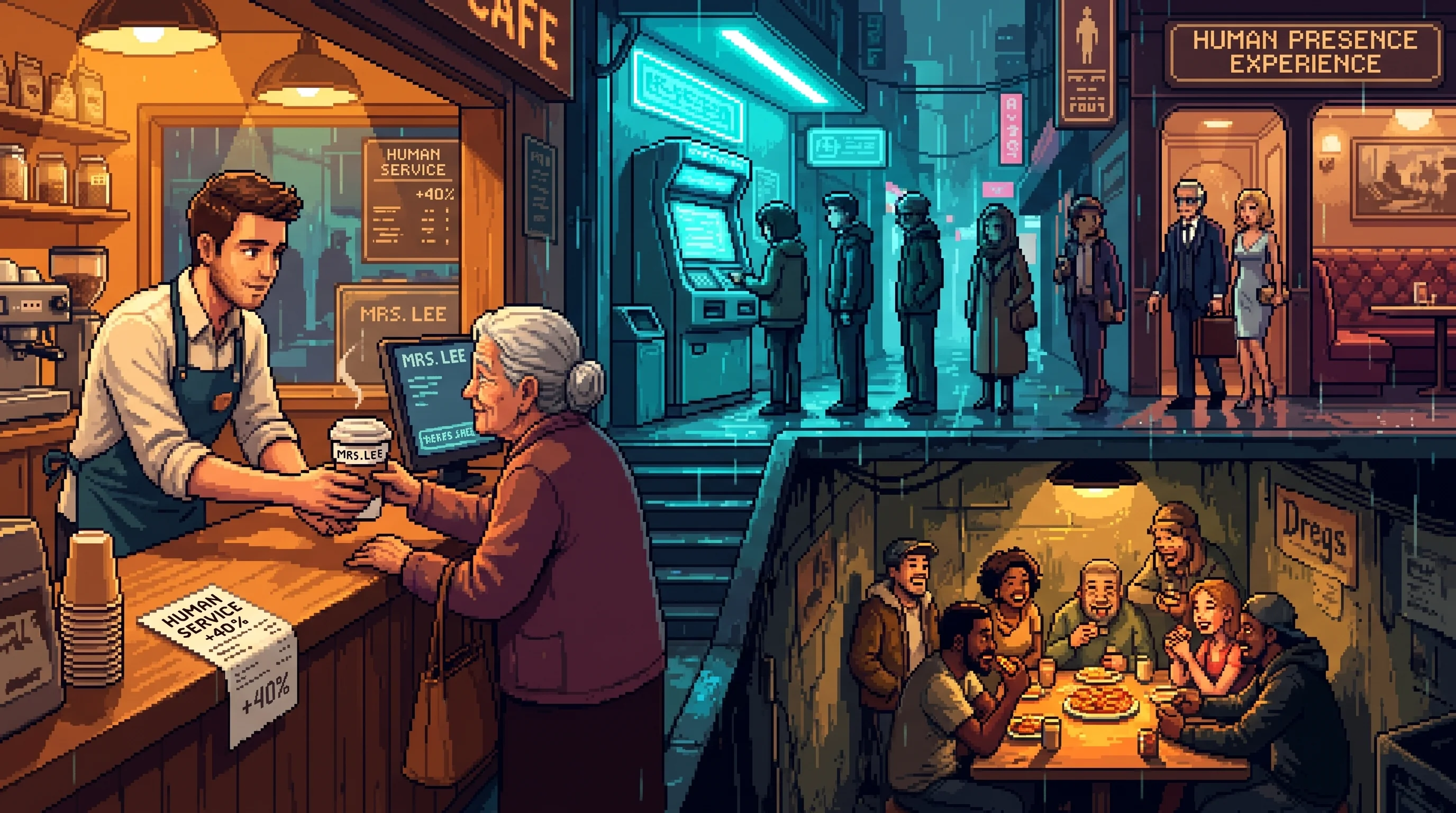
- The Small Talk Cafes — all are spaces where being human is the point, not the byproduct — Wren Adeyemi charges a 40% premium for someone to ask how your day is going; the Newcomer's Minute charges nothing for strangers to give you the most expensive thing on Highport, which is silence
Visual Identity
- Color palette: Earth-blue through viewport glass, surrounding void black, warm amber of observation deck lighting, the faint green status-glow of surveillance sensors that are watching and learning nothing
- Compositional mood: A person standing still at a viewport while the world turns below and the station turns around them and nobody speaks
- Key symbol: Earth from orbit — not the propaganda version, bright and commanding; the real version, small enough to cover with a thumb
- Lighting: The soft glow of a viewport in an otherwise dark observation deck — the only light source that isn't billed to anyone
Archive annex — 2 earlier filings on this recordClose the archive annex
Recovered Historical Material
Indexed — no record on file.
Where It Lives
The construction workers who started it are mostly gone now — dead or transferred Earthside. No one recorded their names. The ritual outlived its creators without anyone deciding it should.
Analog Hour → /world/culture/the-analog-hour
Noise Floor → /world/culture/the-noise-floor
Small Talk Cafés → /world/culture/the-small-talk-cafes
When Highport opened in 2170, every new arrival to the observation decks did the same thing: they walked to the viewport, looked down at Earth, and stopped. Not paused — stopped. Hands mid-gesture. Sentences mid-word. The body’s entire project management system shutting down because the brain had received information it could not file.
The construction crews recognized the expression. They had worn it themselves. Some of them remembered being talked to during theirs — a hand on the shoulder, a voice asking if they were okay. They remembered hating it. So they established the custom: leave them alone. One minute. Don’t speak. Don’t touch. Don’t offer water. Let them have the moment of realizing they are not on the Earth anymore, and that the Earth did not notice them leaving.
The Newcomer’s Minute has been observed for fourteen years. Not written in any regulation. Not enforced by any authority. Ironclad security respects it. Nexus analysts pause mid-scan. Even the cargo handlers who need the newcomer to physically move so they can get a loading frame through the corridor wait the sixty seconds — which is remarkable, given that cargo handlers on Highport bill by the minute and their supervisors bill by the quarter-minute.
There is no announcement. No chime. No designated observer. Someone arrives at an observation deck for the first time, and the people already there simply know. The pace changes when the viewport comes into view. The body locks when the brain tries to reconcile what the eyes are reporting with a lifetime of terrestrial assumptions.
Conversations stop. Datapads lower. Cargo handlers set down their manifests. One minute. Nobody counts aloud. Nobody watches the clock. The minute ends when it ends — when the newcomer takes their first breath after forgetting to breathe, or reaches for the viewport glass, or turns to find every face in the room looking somewhere else, giving them the privacy of a shared understanding.
Fourteen years of this. Thousands of newcomers. Not once broken by schedule pressure, emergency drills, or the kind of person who talks through silences. Something about the observation decks at Highport makes even the loudest people go quiet.
The construction workers who built Highport — welders, hull-sealers, the people floating above the world with their hands — they all had their own Minute. Most of them had it alone, or worse, had it interrupted. A foreman shouting about deadlines. A safety alarm. The mundane crashing into the sacred before the sacred had time to settle.
They remembered. When the station opened and civilians started arriving, the workers recognized the look — the locked jaw, the hand reaching for something that isn’t there, the eyes that go wet without the person knowing why. And they did what no one had done for them: they gave the newcomers room.
The custom spread without anyone spreading it. New residents learned it by experiencing it, then perpetuated it by instinct. Within the first year it had reached every observation deck on Highport, including decks in sections those original workers had never set foot in. By the third year it crossed faction lines. By the fifth, corporate executives arriving in private viewing lounges found their assistants falling silent, respecting a protocol that existed on no briefing document.
Highport’s observation decks are among the most surveilled spaces on the station. The permanent record captures every Newcomer’s Minute in full: the approach to the viewport, the cessation of movement, the biometric cascade — cortisol spike averaging 340% above baseline, heart rate elevation to 112 bpm mean, respiratory rate dropping to 6.2 breaths per minute. The body’s paradoxical response to overwhelming input is to breathe less of it in.
Security analytics have flagged the Newcomer’s Minute as a recurring “anomalous behavioral synchronization event” every quarter since 2171. The algorithm’s recommendation is consistent: investigate source of coordination. Station authorities have declined the recommendation fifty-six consecutive times. The declination form requires a reason. Fifty-six times, the reason field reads: No action required.
The algorithm has begun weighting the Newcomer’s Minute lower in its anomaly rankings. Not because it has been resolved. Because the system learned that flagging it produces no response. The Minute trained the surveillance apparatus to look away — not through interference or hacking, but through the specific human behavior of ignoring a form until the form stops arriving.
Station administration has attempted to formalize the ritual seven times. Proposals have included a commemorative plaque, a suggested photo opportunity zone with branded viewport frames, and a Triumph Social integration that would auto-post the newcomer’s biometric response as a “moment of wonder” with Highport geo-tag. All seven proposals were quietly shelved by the same station chiefs who enforce the Minute informally. Internal memos cite “insufficient community engagement data” and “pending cultural impact assessment.” The cultural impact assessment has never been commissioned. The forms requesting it have been filed, stamped, and routed to offices that process them at a rate of zero per fiscal year.
The data can quantify the cortisol spike but not what causes it. It can timestamp the sixty-second pause but cannot identify the transmission mechanism — how every bystander knows to stop, without signage, without announcement, without a single person saying this is what we do. A newcomer’s first Minute is learned by experiencing it. Fourteen years. No written rule. The permanent record has logged every instance. The permanent record can explain none of them.
Every observation deck on Highport. The public promenades with their scuffed flooring and recycled air. The restricted corridors where Ironclad personnel stand watch. The corporate viewing lounges where Nexus analysts track orbital traffic. The cargo bays with their narrow slit-windows that still show enough of the Earth to stop a person cold.
The Minute sits alongside Highport’s other unwritten protections — the Analog Hour, where the normal rules of digital connectivity suspend; the Noise Floor, where experience is shielded from the systems that would quantify it; the Small Talk Cafés, where Wren Adeyemi charges a 40% premium for someone to ask how your day is going, and the Newcomer’s Minute charges nothing for strangers to give a newcomer the most expensive thing on Highport, which is silence.
The Three-Day Memorial is the only Highport custom with comparable universality. Both transcend jurisdiction and class. Both arose without decree. The Memorial commemorates a shared loss. The Newcomer’s Minute commemorates a shared gain — the terrible privilege of seeing the world from outside it.
- Every observation deck observes the Minute — including restricted sections and military corridors with no social overlap with the original construction workers. No one has mapped the transmission route.
- Newcomers arriving in groups still receive individual minutes. The crowd knows who has seen Earth from orbit before and who hasn’t. The mechanism is not documented anywhere.
- Some long-term residents report that watching the Minute now — watching someone else experience it — affects them more than their own first viewing did. The experience of witnessing appears to compound over time.
- No one has ever broken the Minute. Station analysts have modeled the social pressure required to maintain an unwritten norm across fourteen years and multiple faction lines. The models require inputs that do not exist in the data.
- The seven formalization proposals are technically still active in Ironclad’s project queue, awaiting a cultural impact assessment that has never been commissioned. Nobody has closed them. Nobody will.
Even Ironclad security and Nexus analysts pause during the Newcomer's Minute
Connected To
Supporting Connections
—