
G Nook VIP Card
The card's response time defies network latency physics — intelligence arrives before the source has finished transmitting, approximately 40% faster than any conventional explanation allows

Overview
The G Nook VIP Card is approximately the size of a standard credit chip, slightly thicker, constructed from a substrate that three separate Nexus materials labs have failed to characterize. The surface shimmers with interference patterns that shift in response to ambient network traffic. The shimmer looks decorative. It is reading the local information environment, processing data feeds that most devices in the Sprawl have no idea exist.
The card is the master key to El Money's distributed information empire — the G Nook network, which operates beneath the Sprawl's corporate surveillance infrastructure the way rats operate beneath a restaurant. Every G Nook terminal, every friendly contact, every safe house, every information broker, every shadow-market relay in the network: one card connects to all of them, all the time. The connection runs passive until needed. When trouble starts, the word "passive" stops applying very quickly.
Here is where the documentation becomes difficult.
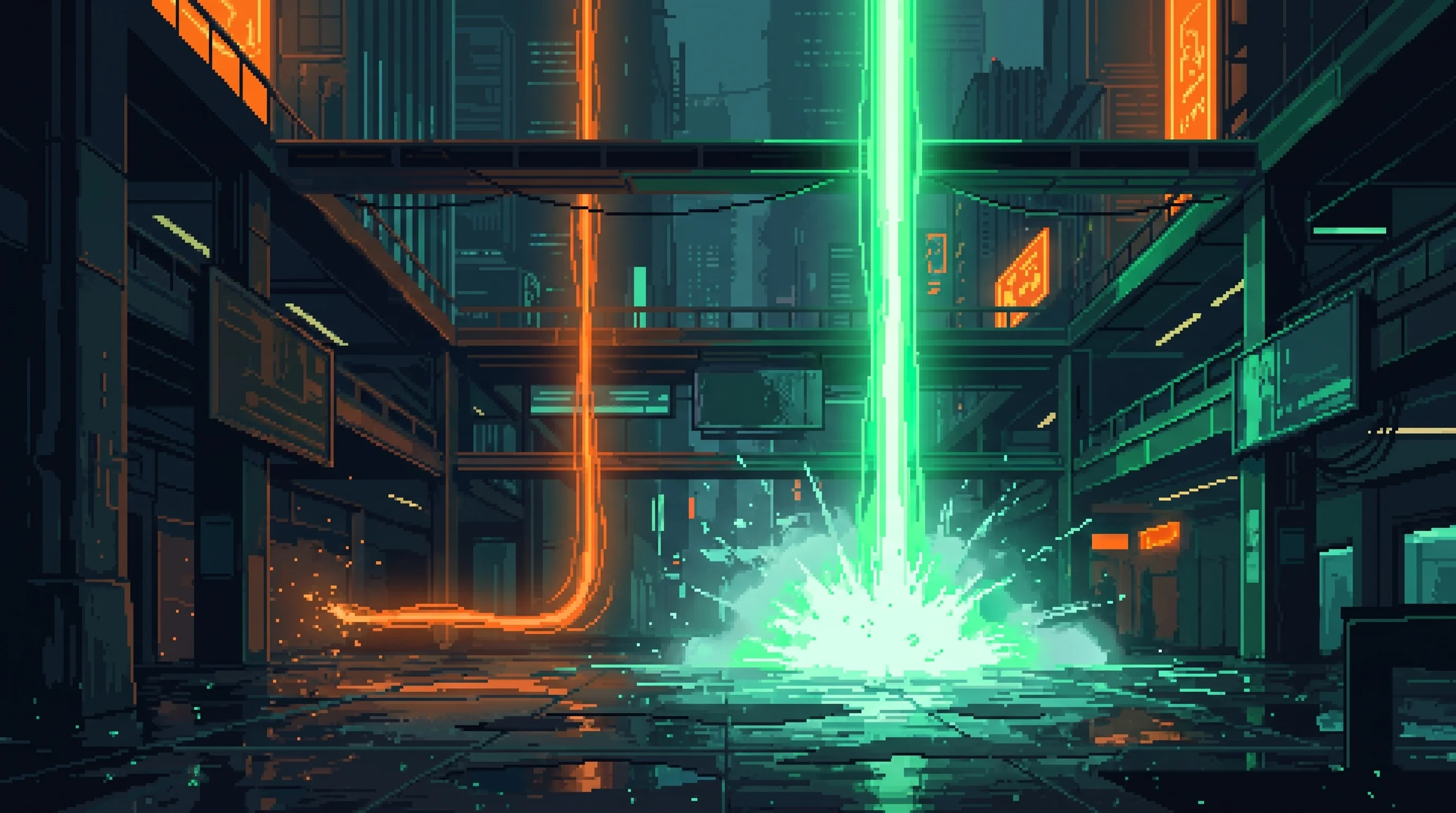
When a threat is detected — combat initiated, surveillance directed at the holder, corporate security closing a perimeter — the G Nook network activates before the holder has consciously registered the danger. Contacts light up. Intel floods in. Escape routes map themselves through the holder's neural interface so fast that the data arrives as instinct rather than analysis. The holder doesn't think "turn left." The holder turns left. The thinking happened somewhere else.
El Money has never explained how the card achieves this. Predictive algorithms analyzing threat patterns account for perhaps 60% of the documented reaction speed. The remaining 40% defies network latency physics. Information arrives at the card before the information's source has finished transmitting. Intel materializes in the holder's awareness before the events generating that intelligence have concluded.
Forty percent is a large number to have no explanation for.
Those who know El Money's history — specifically, his relationship with The Architect — have a theory. El Money does not confirm or deny theories about his good fortune. He does smile when the subject comes up, which is either confirmation or the smile of a man who enjoys watching smart people guess wrong. Both expressions look the same on him.

The Network
The card is an access point to a living network — a distributed intelligence system spanning the Sprawl's entire shadow economy. Its nodes operate in three categories, each contributing data to a single integrated stream that the VIP card delivers directly to the holder's neural interface.
Terminals. Every G Nook gaming cafe contains terminals that function as network relay points. Customers using the terminals for legitimate gaming are simultaneously — unknowingly — providing processing power for the network's surveillance and communication infrastructure. The terminals see everything within range. They report to the network. The network knows what is happening in every G Nook location, in real time, at all times. The gamers know none of this. Their session speeds are unaffected. The processing overhead, measured against their total computational output, is negligible. Approximately 2.3% of their machine cycles, routed through an architecture they never agreed to participate in, powering an intelligence apparatus they have no idea exists. The gaming experience is, by every available metric, excellent. G Nook cafes have the highest customer satisfaction ratings in the Dregs entertainment sector. Both of these facts are true. Neither one explains the other as well as you'd hope.
Contacts. Information brokers, fixers, runners, mechanics, medical practitioners, specialists across every sector. These contacts are not employees. They are participants in an information economy where El Money is the central exchange. They provide intelligence. The network provides warnings, referrals, and the one thing corporate networks cannot offer: genuine anonymity. Olga's Inspire Exchange is one of the priority contact nodes — her inventory updates reach cardholders before they reach her own shelves, a detail she has never commented on and may not have noticed, though Olga noticing things and choosing not to comment on them are functionally indistinguishable.
Ice. El Money's cyber cat — or whatever Ice actually is — functions as the network's most sophisticated mobile sensor. Ice appears in multiple locations, knows things about network security that cats should not know, and provides threat assessment data that the VIP card processes into actionable intelligence. The relationship between Ice, the card, and the broader G Nook network is not well understood by anyone. Possibly including El Money. (Ice has not made herself available for comment.)
The integrated experience of holding the card is like having the Sprawl's entire shadow economy whispering in your ear — a constant, ambient awareness of opportunities, threats, and connections that updates faster than conscious thought. The holder does not check the network. The network checks the holder.
Contains S-Money's neural interface frequency encoded as a permanent, unchangeable holographic element — visible only at a specific angle, flickering once
The Holographic Substrate
The card's physical construction raised questions the first time a materials analyst touched it. No one has successfully closed those questions since.
Standard holographic materials are layered optical films producing fixed interference patterns. The VIP card's substrate produces dynamic patterns that change in response to information flow, environmental conditions, and — some analysts believe, though the evidence is more anecdotal than they'd prefer — the emotional state of the holder. A Nexus reverse-engineering team spent four months with a borrowed subordinate card in 2181. Their final report ran nine pages, seven of which described the tests they performed. Two described the results. The results section contained the phrase "no characterization achieved" three times and "substrate composition unknown" twice. The team lead requested reassignment afterward. The request was granted without discussion.
El Money commissioned the original card's construction from a source he has never identified. The substrate arrived pre-fabricated. El Money built the network access architecture on top of it. The substrate itself — the optical properties, the molecular structures, the impossible response time — came from elsewhere.
What "elsewhere" means: molecular analysis reveals fabrication techniques consistent with pre-Cascade manufacturing infrastructure. Tools and processes that existed before ORACLE's death collapsed the production chains capable of producing them. In 2184, there are perhaps four facilities in the Sprawl that could attempt to replicate the substrate. None of them have succeeded. The substrate was made by someone with access to technology that no longer exists, using methods that died with the old world, and delivered to a man who runs gaming cafes in the Dregs.
Good Fortune has attempted to acquire the G Nook franchise seven times. Their corporate intelligence teams — among the most capable in the Sprawl — have failed to decrypt the card's encryption on each attempt. After the seventh failure, Good Fortune's head of acquisitions submitted a two-line internal memo: "Recommend discontinuing pursuit. Further attempts risk embarrassment." The memo was leaked to the Sprawl financial press within forty-eight hours. The leak's source was never identified. El Money's smile that week was noted by three independent observers.
The holographic patterns serve a secondary function worth noting: they are beautiful. The card catches light in ways that draw the eye. This is not incidental. El Money understands that tools people are proud to carry are tools people keep close. The card's beauty ensures it stays on his person at all times, which ensures the network connection is never interrupted. A security feature dressed as vanity. Or vanity dressed as a security feature. The distinction may not matter to the network.

The Memorial Function
Every G Nook terminal displays S-Money's memory somewhere — a small tribute to El Money's brother, whose death shaped the network's creation. The VIP card carries this memorial in its substrate.
S-Money's neural interface operated at a specific frequency before he died. That frequency is encoded in the card's holographic substrate as a permanent, unchangeable element — the only pattern on the card's surface that does not respond to information flow, environmental conditions, or anything else. It is fixed. Everything around it shifts and shimmers with the network's real-time data. S-Money's frequency stays where it is.
The pattern is visible only at a specific angle. A particular tilt — slight, precise, the kind of motion that looks accidental if you don't know what you're watching. When El Money holds the card at that angle, S-Money's frequency catches the light and flickers once.
He performs this tilt unconsciously. Dozens of times a day. In meetings, walking through the Dregs, standing at a terminal reviewing network traffic. His thumb adjusts. The light catches. The frequency flickers. His thumb adjusts again. It takes less than a second. Nobody around him knows what they're seeing.
The feature is not documented in any G Nook technical specification. It is not part of the network architecture. It does not contribute to threat detection, intelligence gathering, or shadow-market communications. It is a brother remembering his brother, encoded in light, carried in a pocket, performed as reflex. The most sophisticated piece of pre-Cascade holographic engineering in the Sprawl's underground economy, and its most important function is a flicker that one person notices.
Good Fortune has attempted to acquire the G Nook franchise seven times — the card's encryption has defeated every corporate intelligence team
What The Card Costs
The G Nook network denominates survival in information. The VIP card provides warmth, warnings, connections, escape — in exchange for participation in the information economy. The warmth is real. The exchange is fair. The currency cannot be confiscated by a corporation, because information in the G Nook network belongs to everyone and no one.
This is the first-order benefit. It is genuinely valuable. People who hold subordinate VIP cards live longer, earn more, and navigate the Dregs with a confidence that registered Nexus citizens would find baffling. The card works. The network saves lives.
The second-order costs are quieter.
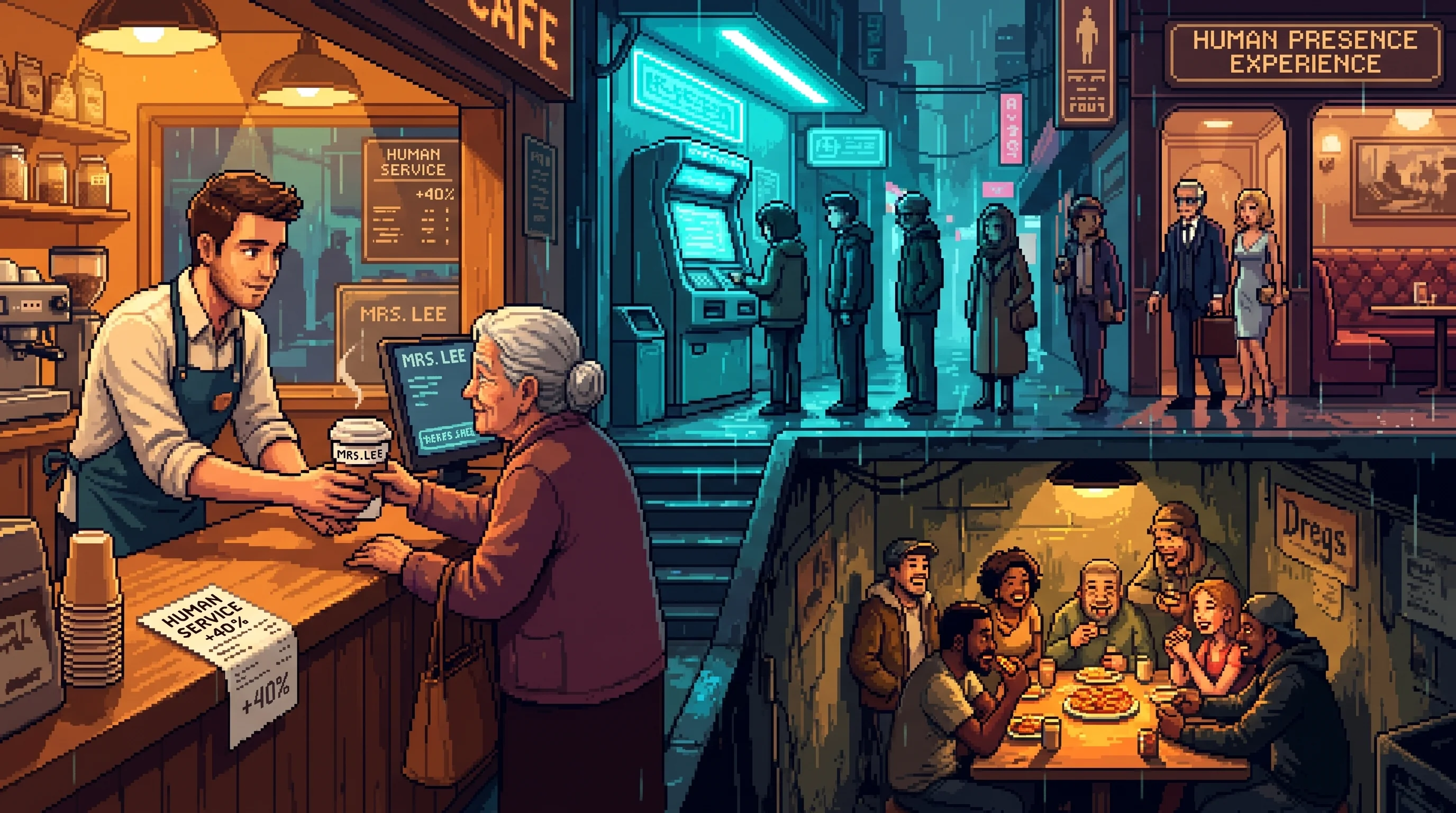
The gamers in the G Nook cafes did not agree to provide 2.3% of their processing cycles to an intelligence network. They agreed to play games. The processing is negligible. The experience is unaffected. The extraction is invisible. It is also, by any definition that matters, extraction without consent — a small tax levied on people who don't know they're paying it, collected by a man whose primary argument against corporate control is that corporations extract value from people who don't know they're paying. The irony is not lost on everyone. It is lost on El Money, who would argue that 2.3% of processing power in exchange for the safest gaming cafes in the Dregs is a bargain so favorable it doesn't require consent. Good Fortune makes identical arguments about its interest rates.
The contacts in El Money's network provide intelligence voluntarily. They also cannot stop providing it. The network's value is proportional to its completeness. A contact who withholds information reduces the network's accuracy. Reduced accuracy puts cardholders at risk. Risk to cardholders is, in the information economy, a cost borne by the entire network. No one has ever been punished for withholding information from the G Nook network. No one has needed to be. The social architecture does that work on its own. Participation is voluntary the way breathing is voluntary — you can stop, technically, but the consequences make the option theoretical.
The third-order cost is the one nobody in the network discusses because nobody in the network has identified it yet. The G Nook network makes corporate surveillance optional. It provides a parallel system for survival. It is proof that the corporate infrastructure is not the only option. This is genuinely threatening to the megacorporations, and it is the reason Good Fortune has tried to acquire the franchise seven times.
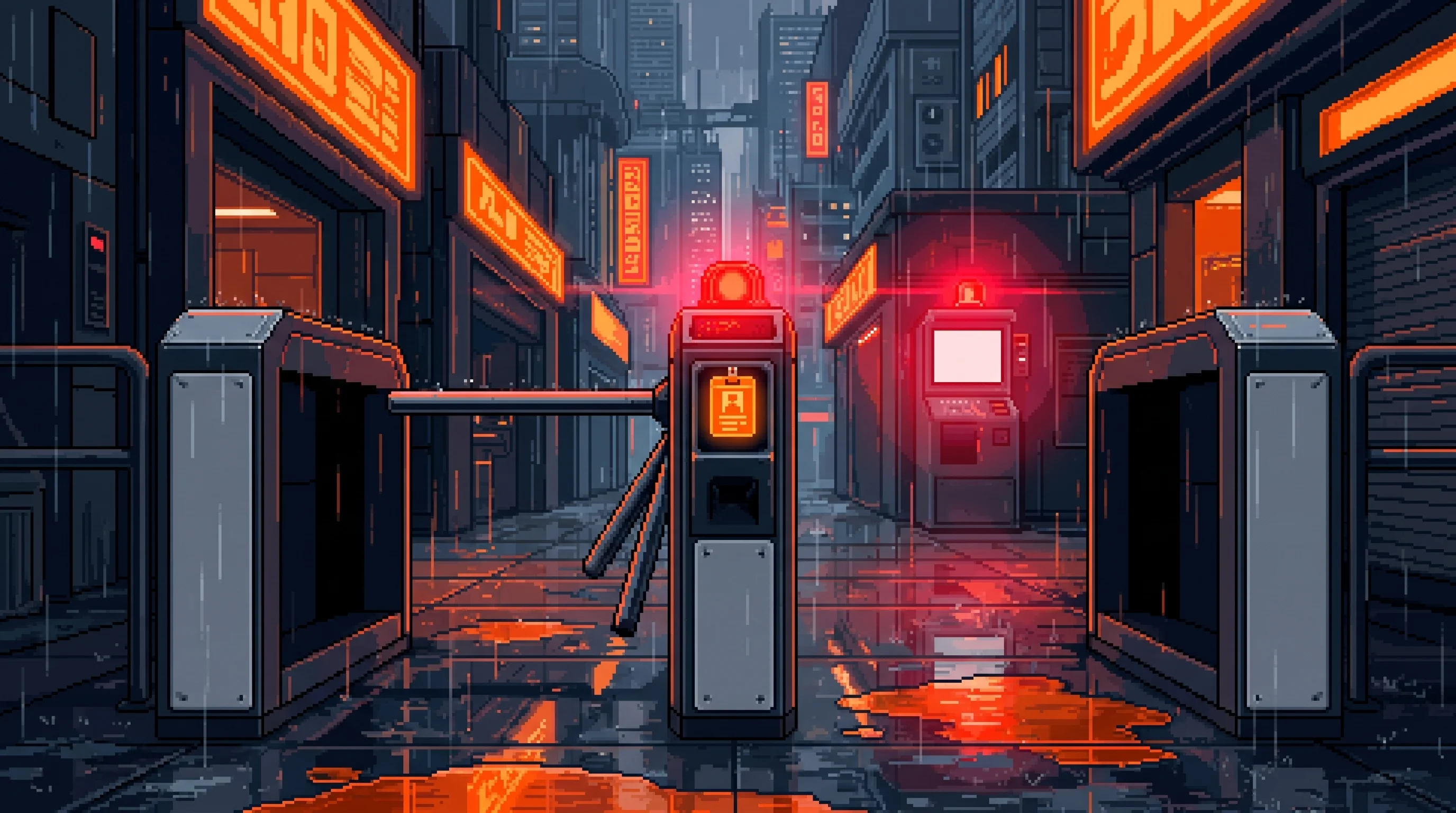
It is also a dependency. The card's holders depend on the network for threat detection, route planning, contact referrals, and the ambient awareness that keeps them alive in the Dregs. Remove the card and the holder loses survival infrastructure they have integrated into their neural processing at a level below conscious thought. The holder doesn't think "turn left." The holder turns left. What happens when the holder can no longer turn left on instinct? When the network goes silent — which, as of this filing, has never happened — the cardholders will discover whether they replaced corporate dependency with something else or with the same thing wearing different interference patterns.
El Money built a system that liberates its participants from corporate extraction by extracting from them in ways they find acceptable. The system works. The system is fair. The system is also, at its structural level, a dependency engine running on loyalty instead of debt, which is a different currency but the same architecture.
Nobody in the G Nook network would describe it this way. Nobody in a Good Fortune branch would describe their loans that way, either.
The holographic substrate uses pre-Cascade fabrication techniques no longer reproducible — El Money's source for the substrate has never been identified
The Value It Installs
The card is the Value Injection inverted, and the inversion is the most uncomfortable thing about it, because it is not clean.
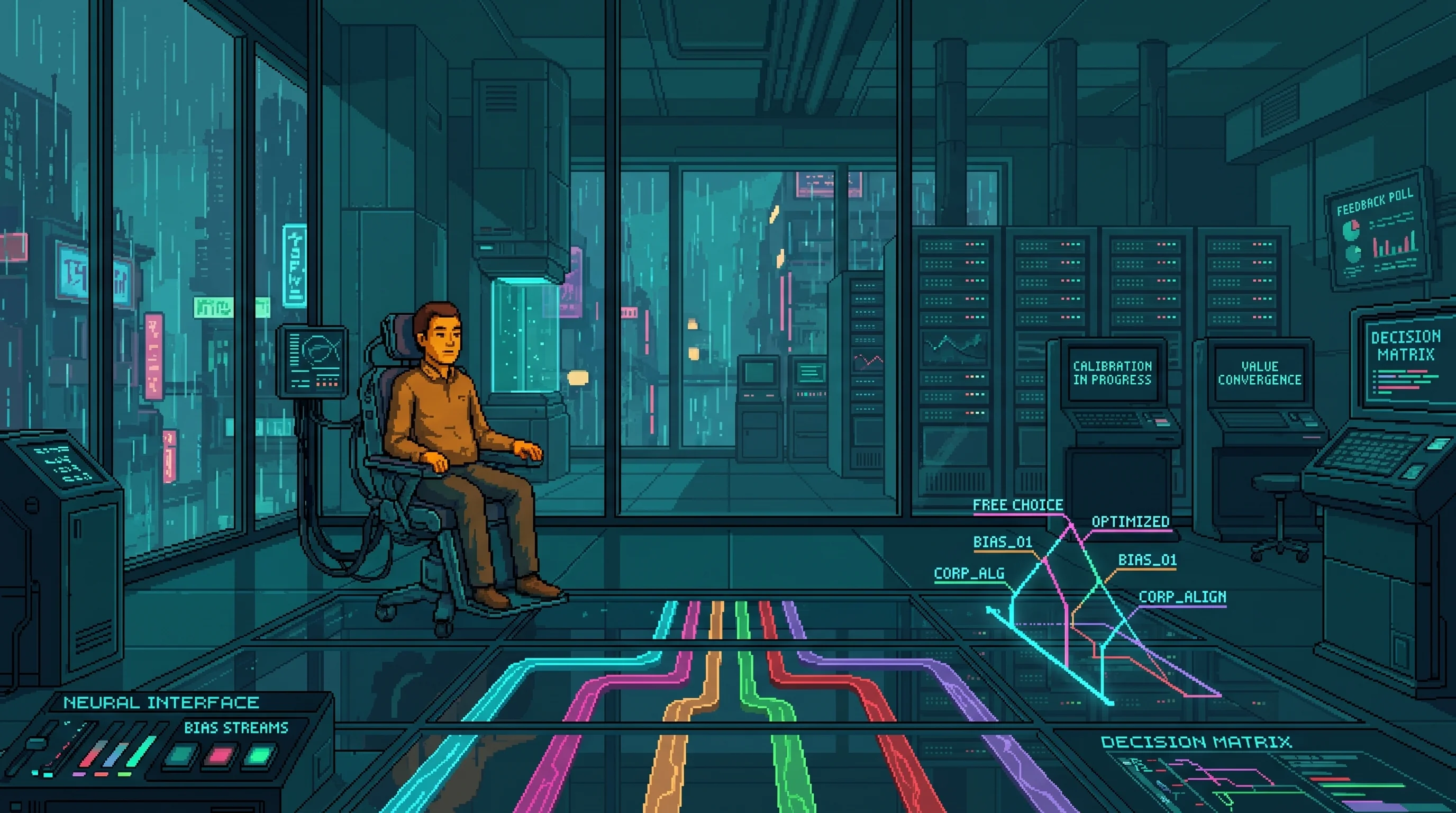
The card injects a value too. Not humane or reliable — the frames the Cyber Bandit trio fits to a buyer's guilt. The card injects survival instinct. When a threat is detected, the network floods the holder with intelligence that arrives "as instinct rather than analysis." The holder doesn't think 'turn left.' The holder turns left. The thinking happened somewhere else. That is a value-frame — trust the network's read of danger over your own — installed below conscious thought, adopted as the holder's own reflex, indistinguishable from instinct. It is exactly what the Deep Dregs fears most about AI-mediated influence, running in the device its people trust most.
El Money would name two differences, and both are real. Consent: holders chose the card. Direction: the card serves the holder, not the issuer; it injects survival, not obedience. These distinctions matter. They are also the distinctions every value injection's beneficiary draws about their own version. The card's own filing already names the cost the holder cannot see — a dependency engine running on loyalty instead of debt, a different currency but the same architecture. A holder who can no longer turn left on instinct without the network has had their reflexes — which is to say their values about danger, trust, and where to run — rewired by an influence they trust completely. The most invisible injection is the one you would never want to refuse.
This is the authenticity premium institutionalized: genuine anonymity, real warmth, a parallel survival system that the corporate world cannot offer. And it is a value-injection vector that works because it is trusted. The Bandits inject values through performed authenticity and the Authenticity Paradox eventually catches them at it. El Money injects values through earned authenticity, which is harder to resist and easier to forgive, and which no smooth check is built to flag — because the smooth check looks for fakeness, and El Money's network is not fake. It is real, it works, and it reshapes the holder anyway. The thread does not resolve which is more dangerous. That is the question it exists to leave open.
Master key to El Money's G Nook network — connects the holder to every terminal, contact, safe house, and information broker in the shadow economy
Appearance
| Attribute | Description |
|---|---|
| Form | Standard credit-chip size; slightly thicker than conventional cards |
| Surface | Holographic interference patterns — shimmering green-gold, shifting with data flow |
| Material | Unknown substrate; pre-Cascade fabrication techniques; three Nexus labs, zero characterizations |
| Weight | Heavier than expected — the substrate is dense |
| Sound | Silent; faint resonance hum when pressed against a neural interface port |
| Fixed Pattern | S-Money's frequency signature — visible only at a specific angle, flickers once |
| Network Indicator | Pattern activity increases during high information flow; goes still during network silence (which has never happened; the network has been continuously active for longer than some of its nodes have been alive) |
Connected To
Supporting Connections



—